Air Cargo Chargeable Weight: How to Calculate It Step by Step
How airlines calculate chargeable weight: volumetric weight with the IATA 6,000 divisor, rounding rules, worked carton and pallet examples, and density.
Air cargo · · 5 min read
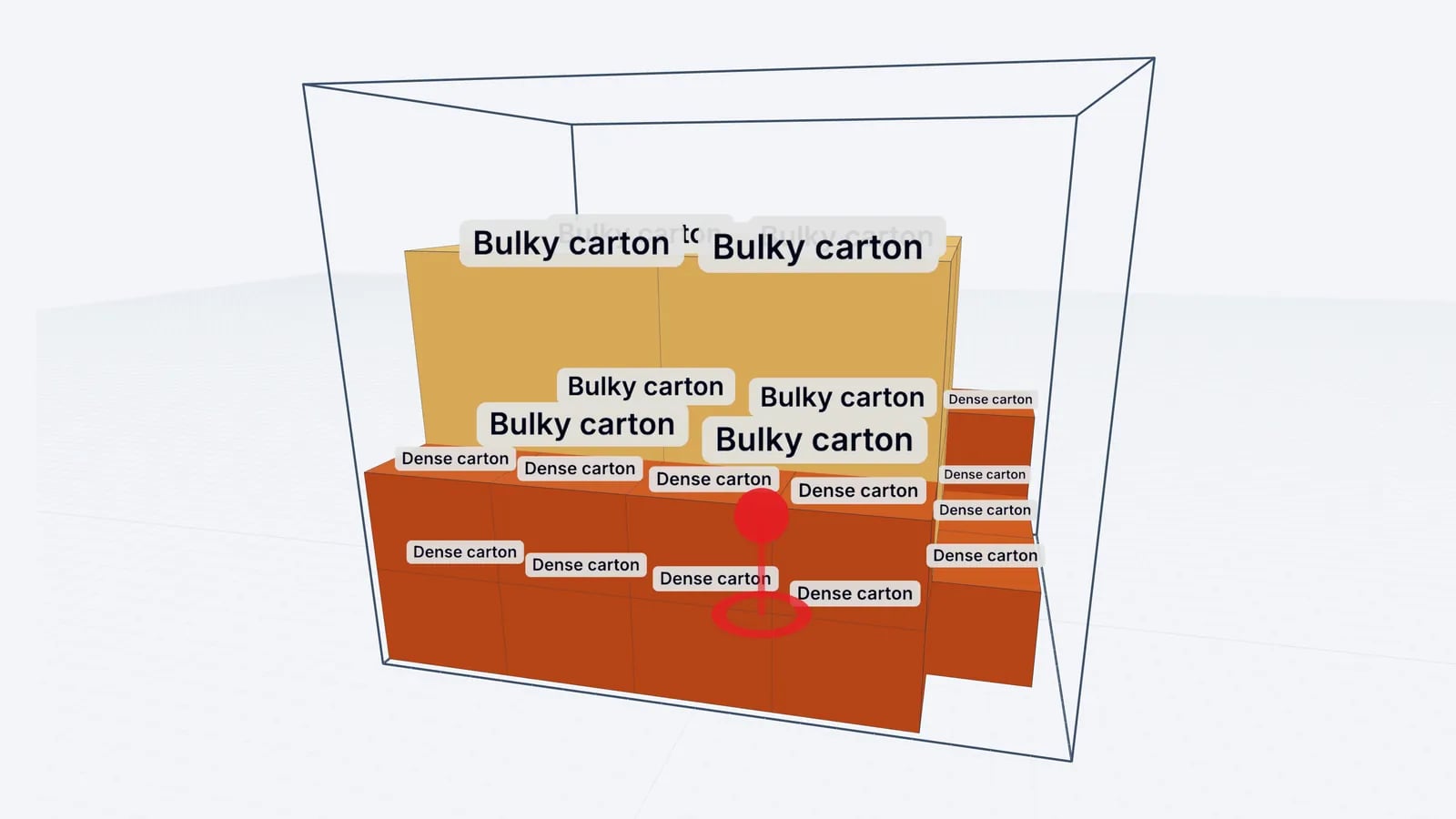
Chargeable weight is the weight an airline bills you for: the higher of the shipment's actual gross weight and its volumetric weight. For general air cargo, volumetric weight in kilograms is length × width × height in centimetres divided by 6,000 (the IATA standard), which is the same as charging 167 kg for every cubic metre. Light, bulky freight pays for its space; dense freight pays for its weight.
The rule exists because aircraft run out of space and weight at the same time only if cargo has the right density. Volumetric weight puts a price on space so that a pallet of foam cushions does not fly for the same money as a box of bolts.
The formula
- 1Measure each piece at its outermost points (including pallet, overhang and any bulge), in centimetres.
- 2Volume of the piece in cm³ = length × width × height.
- 3Volumetric weight in kg = volume in cm³ ÷ 6,000. Add up all pieces.
- 4Actual weight = total gross weight on a calibrated scale, including packaging and pallets.
- 5Chargeable weight = the higher of the two, rounded up to the next half kilogram.
In metric shorthand: volumetric kg = m³ × 166.67. In imperial units the common equivalent is cubic inches ÷ 366 for kilograms, or ÷ 166 for pounds.
Good to know
The 6,000 divisor is the IATA standard for airport-to-airport general cargo. Express and courier services commonly use 5,000 (200 kg per m³), and some carriers or products use other factors. Check the divisor in your rate agreement, because it changes the bill directly.
Divisor: 6,000
- Chargeable kg per m³
- 166.67
- Where you typically see it
- IATA general air cargo, most forwarder air rates
Divisor: 5,000
- Chargeable kg per m³
- 200
- Where you typically see it
- Express and courier services
Divisor: 4,000
- Chargeable kg per m³
- 250
- Where you typically see it
- Some express and postal products
| Divisor | Chargeable kg per m³ | Where you typically see it |
|---|---|---|
| 6,000 | 166.67 | IATA general air cargo, most forwarder air rates |
| 5,000 | 200 | Express and courier services |
| 4,000 | 250 | Some express and postal products |
Worked example 1: light cartons
Say you ship 12 cartons of clothing, each 60 × 40 × 50 cm and 14 kg.
- Volume per carton: 60 × 40 × 50 = 120,000 cm³.
- Volumetric weight per carton: 120,000 ÷ 6,000 = 20 kg. For 12 cartons: 240 kg.
- Actual weight: 12 × 14 = 168 kg.
- Chargeable weight: 240 kg. You pay for 72 kg that does not exist on the scale.
If the same clothing could be packed into cartons of 60 × 40 × 40 cm (folded tighter, less void fill), each carton becomes 96,000 ÷ 6,000 = 16 kg volumetric, so 192 kg in total. Same goods, same actual weight, 48 kg less to pay for.
Worked example 2: a pallet
A Euro pallet (120 × 80 cm) of mixed parts, built to 160 cm high, weighs 220 kg.
- Volume: 120 × 80 × 160 = 1,536,000 cm³.
- Volumetric weight: 1,536,000 ÷ 6,000 = 256 kg.
- Chargeable weight: 256 kg, because it is higher than the 220 kg actual.
Now suppose the same goods can be rebuilt to 120 cm high by filling gaps in the lower layers. Volumetric weight drops to 120 × 80 × 120 ÷ 6,000 = 192 kg, so the actual weight of 220 kg becomes the chargeable weight. You saved 36 kg of charges and the pallet became more stable. Once actual weight wins, further squeezing saves nothing.
Worked example 3: dense cargo
Two machine crates, each 100 × 80 × 60 cm and 300 kg. Volumetric: 480,000 ÷ 6,000 = 80 kg each, 160 kg total. Actual: 600 kg. Chargeable: 600 kg. Dense cargo is billed on the scale, and packing it smaller would not change the price. What matters here is floor loading and piece weight, which handlers address with spreader boards on the ULD.
Rounding and measuring rules
- Under IATA rules, chargeable weight is rounded up to the next 0.5 kg: 240.2 kg becomes 240.5 kg, 240.6 kg becomes 241 kg.
- Dimensions are normally rounded to the nearest whole centimetre. Carriers measure the outermost points, so a bulging carton or a pallet with a slight overhang is billed at its widest.
- Volumetric weight is calculated for the whole shipment, not piece by piece, then compared with the total actual weight. A mix of dense and light pieces can balance out.
- Handlers increasingly measure with automatic dimensioning systems at acceptance. If your declared dimensions are lower, expect the bill to follow their numbers.
Tip
Measure and weigh the shipment after it is packed and palletised, not from the product data sheet. The difference between the product size and the shipped size (pallet, corner boards, stretch wrap, a 3 cm bulge) is exactly where unexpected charges come from.
Density: the number that decides your bill
Divide actual weight by volume to get the density of your shipment in kg/m³. If it is below about 167 kg/m³, you pay on volume, and every centimetre of packaging and every gap on the pallet costs money. If it is above 167 kg/m³, you pay on weight, and the size of the packaging no longer affects the price.
In example 1, density is 168 kg ÷ 1.44 m³ = 117 kg/m³, well below the break-even, so packing tighter paid off. In example 3, density is 600 ÷ 0.96 = 625 kg/m³, so there is nothing to gain from smaller crates.
Consolidators use the same logic at ULD level: mixing dense and light shipments in one ULD lets them sell space and weight together. This is part of why the air vs sea freight decision often comes down to density.
Reducing chargeable weight in practice
- Choose cartons that fit the product, not the other way round. Excess void fill is paid for at 167 kg per m³.
- Build pallets to a flat, square top without overhang, and do not use a pallet at all for a few light cartons if the carrier accepts loose pieces.
- Combine part-filled cartons before shipping.
- Check whether your goods can be turned or nested to lower the built height.
- For mixed shipments, plan the build in 3D before you pack. A tool like EveryLoading shows the outer size of a built pallet or ULD and the volume used, so you can compare layouts before anything is taped.
Packaging choices are covered in more depth in packing for air freight, and the ULDs your cargo ends up in are explained in ULD types explained.
Frequently asked questions
Is chargeable weight always the higher of the two?
Yes. The airline compares actual gross weight with volumetric weight for the whole shipment and bills the higher figure, rounded up to the next half kilogram under IATA rules.
Why do some quotes use 5,000 instead of 6,000?
Express and courier services commonly use a divisor of 5,000, which charges 200 kg per cubic metre instead of about 167 kg. Always check which divisor your rate is based on.
How do I calculate volumetric weight in cubic metres?
Multiply the volume in m³ by 166.67 for the 6,000 divisor. For example, 2.5 m³ has a volumetric weight of about 417 kg.
Does a pallet count towards chargeable weight?
Yes. The pallet adds to both the actual weight and the measured height, so its size and weight are included in both calculations.
Keep reading
Air cargo · · 5 min read
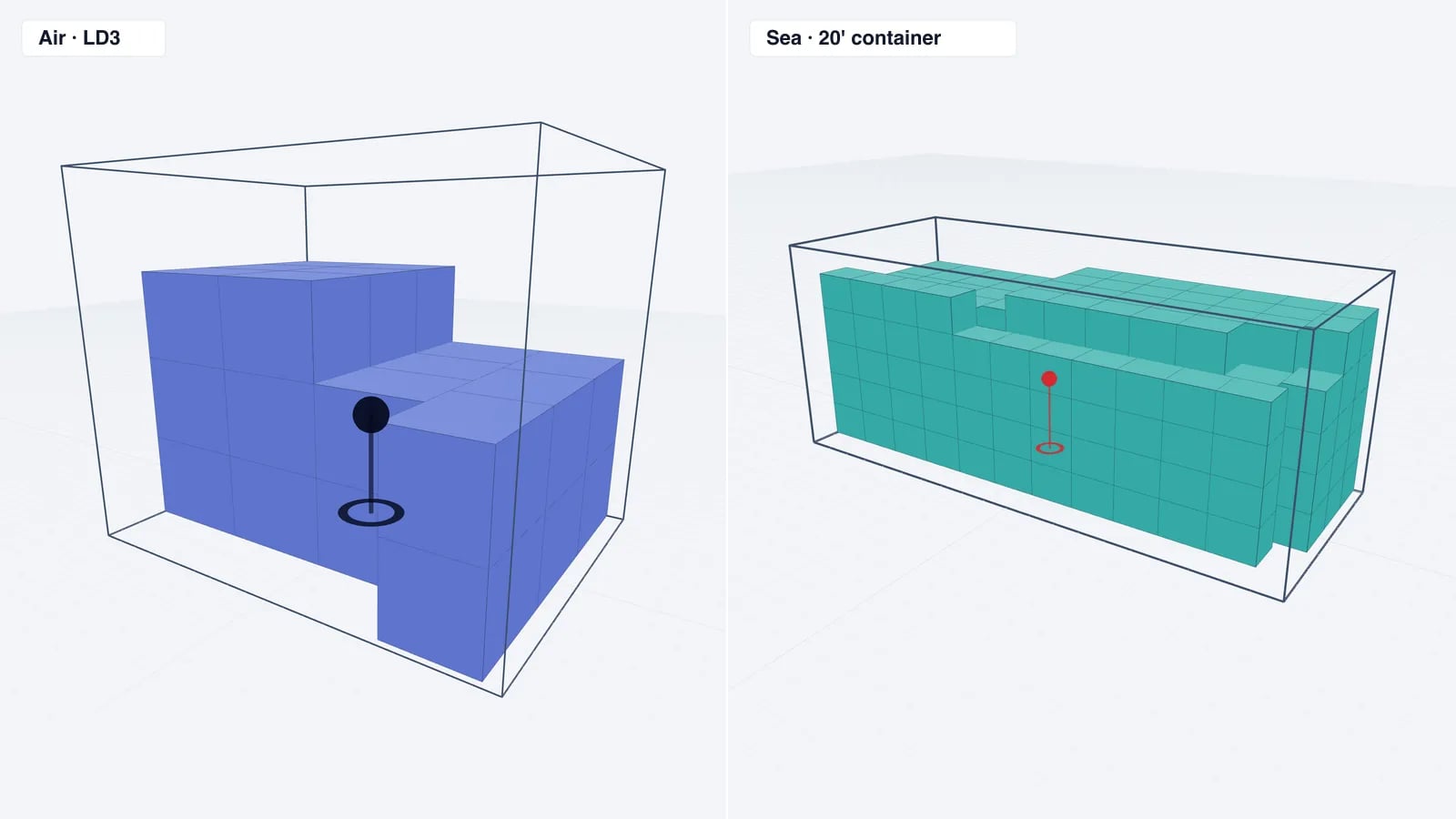
Air vs Sea Freight: When to Switch Mode and How Planning Differs
Air vs sea freight compared for planners: how each mode charges, when air pays, density break-evens, ULDs vs containers, consolidation and a worked example.
Read article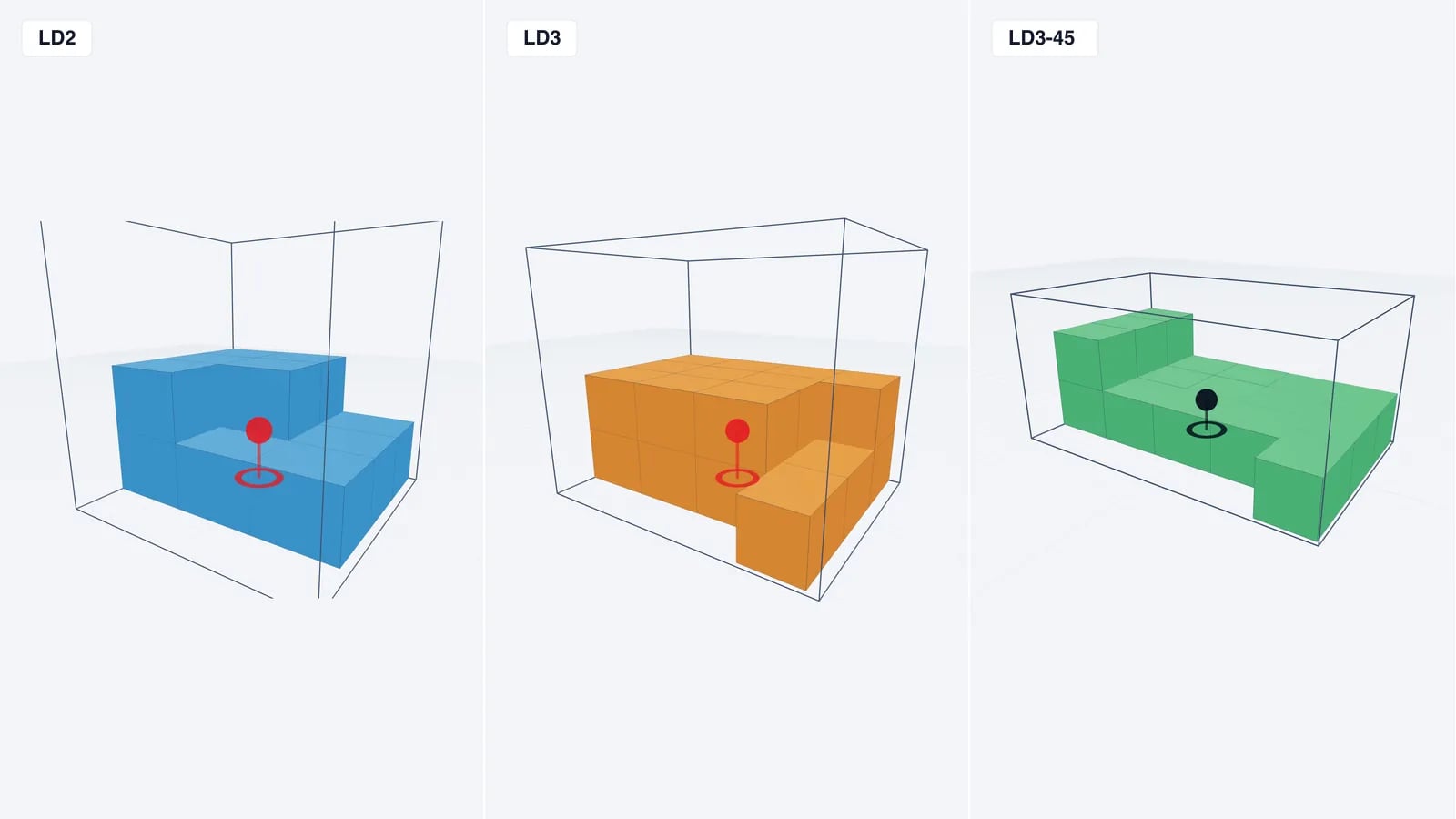
Air cargo · · 7 min read
ULD Types Explained: LD3, LD2, LD3-45, PMC and PAG Pallets
A practical guide to air cargo ULD types: LD3, LD3-45, LD2, LD6, PMC and PAG pallets, with typical dimensions, max gross weights and the aircraft that use them.
Read article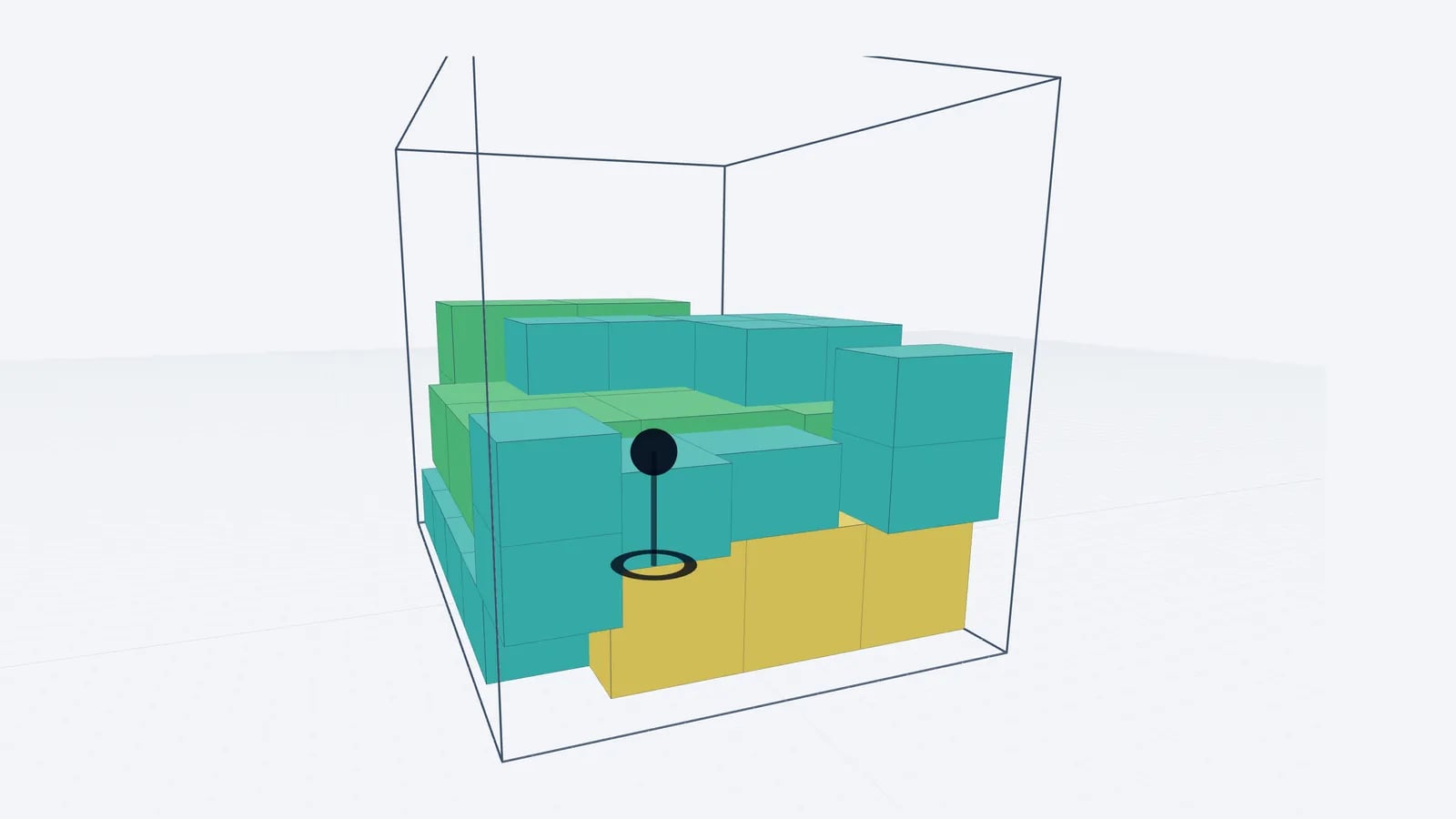
Air cargo · · 6 min read
Air Freight Packaging: How to Pack Cargo That Flies Cheaper
Air freight packaging done right: carton strength, sizes that suit ULDs, pallets and ISPM 15, labelling, and practical ways to cut volumetric weight.
Read article