ULD Build-Up: How Ground Handlers Build Air Cargo Pallets
How a ULD build-up works: checking the unit, layering, floor loading, building to the contour, netting, weighing and tagging, with a worked PMC pallet example.
Air cargo · · 6 min read
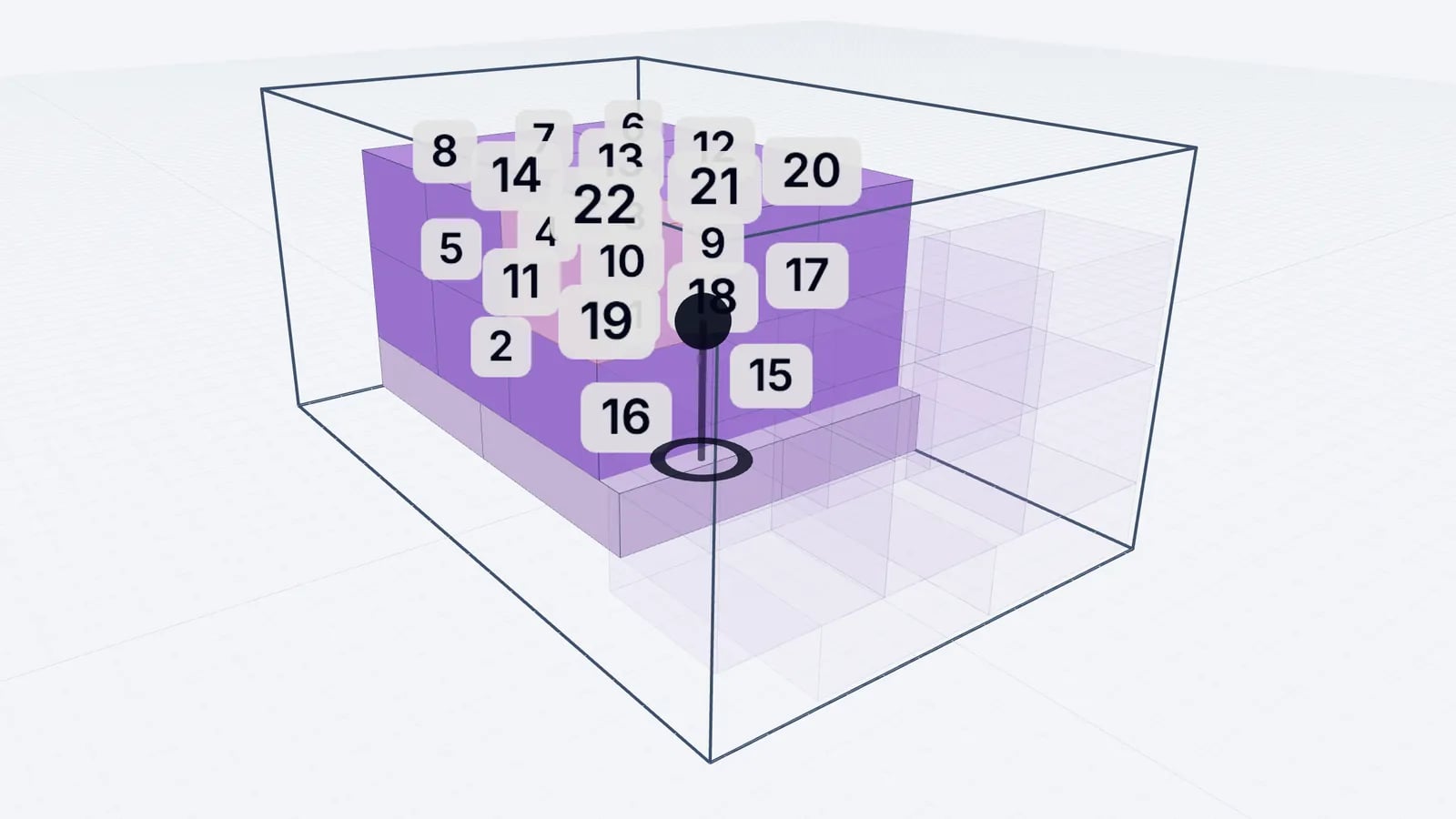
ULD build-up is the process of loading cargo onto an air cargo pallet or into a container so it is stable, within the weight limits for its aircraft position, and inside the contour (the outline that lets it pass through the door and fit the hold). Handlers build heavy, regular pieces at the bottom, spread weight across the base, shape the top to the contour, then secure with a net or straps, weigh the unit and tag it for load control.
This article walks through how a typical build is planned and done. It is a general guide: each airline publishes its own ground handling manual with exact contours, weight limits and restraint rules, and those always take priority.
Before the build: what the handler needs to know
- ULD type and aircraft position. A PMC in a lower-deck position and a PMC on a freighter main deck have different height contours and different weight limits.
- Contour code. The airline specifies the profile, for example a lower-deck contour around 160 cm high, or a main-deck contour that may allow around 244 cm or more in some positions with sloped upper corners.
- Maximum gross weight for that position, and any floor loading limit (kg per m² or per running metre) for the unit and the aircraft.
- The cargo list with dimensions, weights, piece counts and handling codes: dangerous goods, perishables, fragile, this way up, do not stack.
- Segregation rules. Some dangerous goods cannot share a ULD with others, and some special cargo (live animals, human remains, valuables) has its own procedures.
Unit types and sizes are explained in ULD types explained.
Step by step: building a pallet
- 1Inspect the ULD. Check the base plate for damage and bent edge rails, and the net for broken meshes or worn fittings. A damaged unit should not fly.
- 2Place a contour gauge or check the profile. Many handlers build inside a frame that shows the allowed outline, or check against marked posts.
- 3Lay protection. A plastic sheet underneath for weather protection, and timber or plastic spreaders where heavy pieces will stand.
- 4Build the base layer. Heaviest and strongest pieces first, centred on the pallet, with even weight on both halves. Leave the edge free where the net attaches.
- 5Build up in stable layers. Interlock cartons where possible, keep columns straight, and put fragile or light pieces on top.
- 6Shape the top to the contour. Step the upper layers in where the profile slopes. Nothing may stick out past the outline.
- 7Cover and net. Top sheet over the build, then the certified net, tightened evenly so the build cannot move.
- 8Weigh the ULD. Every built unit is weighed on a calibrated scale. The weight goes on the ULD tag and into the load control system.
- 9Tag and photograph. The ULD tag shows the unit number, destination, flight, weight and special loads. Many handlers photograph each side as evidence of the build.
Containers follow the same sequence without the netting: the load is held by the walls and a door or curtain, and heavy cartons go to the floor and the straight back wall rather than into the sloped contour wing.
Weight distribution and floor loading
Weight on a ULD is not only about the total. Aircraft floors and ULD bases have limits on how much weight can sit on a given area. A heavy machine crate standing on two narrow skids can exceed the floor limit even though the pallet is well under its gross weight.
The usual answer is shoring: timber or composite boards laid under the piece to spread its weight over a larger area. To check, divide the piece weight by its contact area. For example, a 900 kg crate on two skids, each 120 × 10 cm, stands on 2 × 0.12 m² = 0.24 m², which is 900 ÷ 0.24 = 3,750 kg/m². Spread it on boards covering 120 × 100 cm (1.2 m²) and the load falls to 750 kg/m². Compare those figures with the limit published for your aircraft position.
Tip
Keep the centre of gravity of the built ULD close to the middle of the base, both across and along. Heavy items stacked at one end make the unit harder to move on roller decks and put more load on one side of the restraint system.
Building to the contour
Contours exist because the ULD has to pass through the cargo door and then fit the fuselage cross-section with clearance. A lower-deck pallet is limited to around 160 cm high and may need the top corners trimmed. Main-deck contours on freighters are much taller and the outline varies by position along the aircraft.
Cartons that suit the contour make the build faster. Small, uniform cartons can be stepped in neatly at the shoulders. A single tall crate cannot be stepped, so it has to go in the middle of the base where the contour is at full height.
Worked example: cartons on a lower-deck PMC
Say a handler has 110 cartons of 60 × 40 × 40 cm, 12 kg each, to build on a PMC (318 × 244 cm base) in a lower-deck position with a 160 cm build height. Assume the handler leaves a margin for the net edge and works with a usable footprint of about 300 × 230 cm (check your own airline's figure).
- 1Orientation A: 60 cm side along the 300 cm length gives 5 cartons; 40 cm side across the 230 cm width gives 5 cartons (200 cm). That is 25 per layer, with a 30 cm strip unused.
- 2Orientation B: 40 cm side along the length gives 7 cartons (280 cm); 60 cm across the width gives 3 (180 cm). That is 21 per layer. Orientation A wins.
- 3Height: 160 ÷ 40 = 4 layers. Without contour trimming, 4 × 25 = 100 cartons.
- 4Weight: 100 × 12 = 1,200 kg of cargo, plus the pallet and net. Check this against the position limit.
- 5If the contour requires stepping in the top corners, the top layer might lose a few cartons along the edges. The remaining 10 or more cartons go on another ULD or as bulk.
A 3D build plan done before the cargo arrives at the warehouse shows exactly this sort of result: how many fit, what is left over, and where the heavy pieces go. EveryLoading lets you enter a pallet base and build height as a custom size, set stacking rules per item, and play the loading sequence back layer by layer (see the loading sequence). It plans a rectangular space, so trim the build height or footprint to stay inside a sloped contour.
Common build-up mistakes
- Building over the edge rails, so the net cannot be attached properly.
- Heavy pieces on top of cartons that cannot bear the weight, crushing the lower layer in flight.
- Leaving gaps in the middle of the build that let cartons shift once the net settles.
- Ignoring orientation marks on liquids and equipment.
- Building first and checking the contour afterwards, which means rebuilding.
- Not recording the actual weight. Load control depends on accurate ULD weights for the aircraft's weight and balance.
Shippers can make the handler's job easier with sensible packaging: see packing for air freight and the specific constraints of the LD3 container.
Frequently asked questions
Who builds ULDs?
Usually the airline's ground handler at the airport cargo terminal. Large forwarders sometimes build their own ULDs (shipper-built or forwarder-built units) and deliver them ready to fly, under the airline's rules.
What is a ULD contour?
It is the allowed outline of a built ULD, set so the unit passes through the aircraft door and fits the hold with clearance. Each aircraft position has its own contour code and height.
Why is every ULD weighed?
The aircraft's weight and balance is calculated from the weight and position of each ULD. Estimated weights are not good enough, so built units are weighed on calibrated scales before loading.
What are spreader boards for?
They spread the weight of a heavy piece over a larger area so it does not exceed the floor loading limit of the ULD or the aircraft.
Keep reading
Air cargo · · 5 min read
Air vs Sea Freight: When to Switch Mode and How Planning Differs
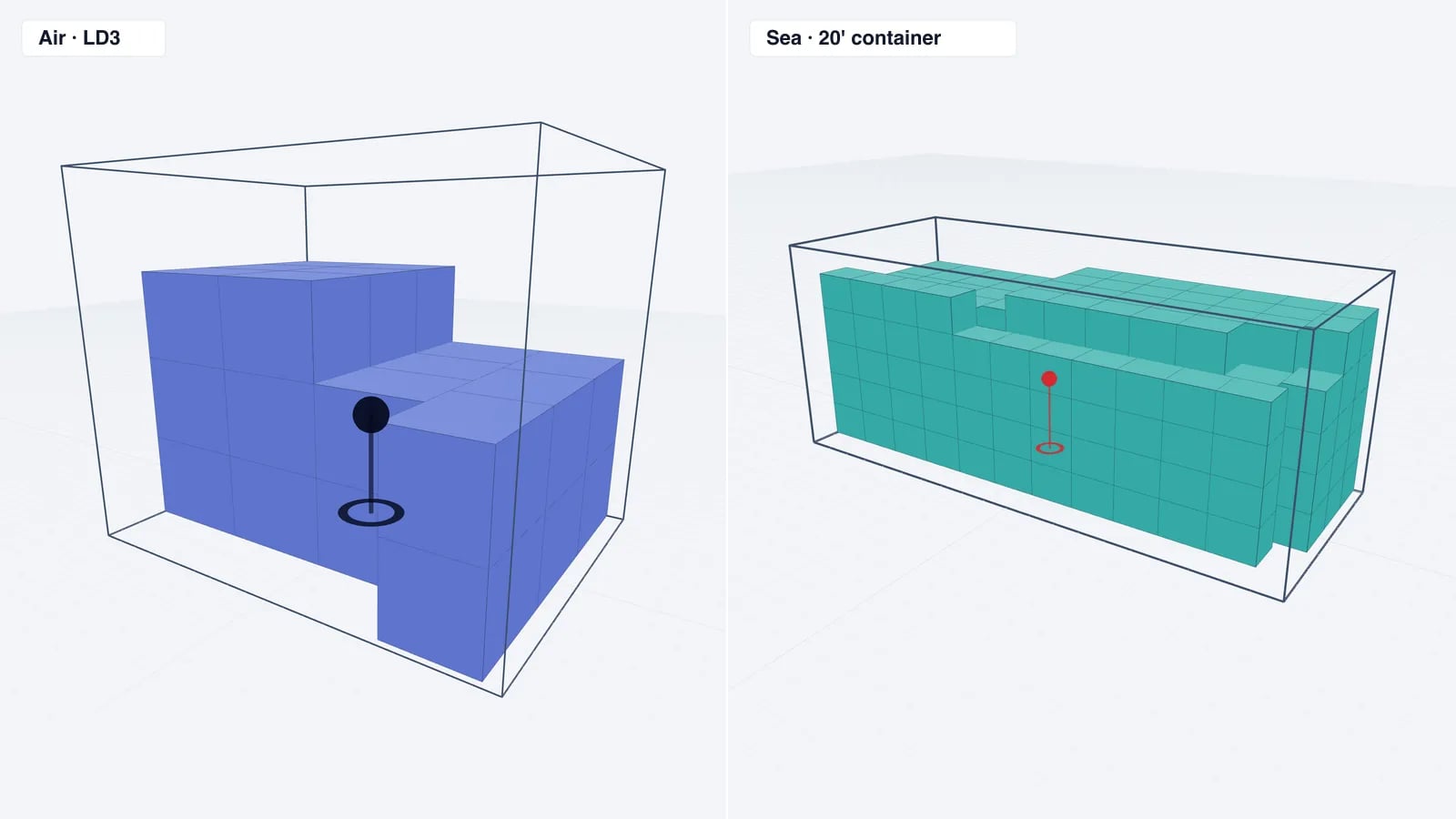
Air vs sea freight compared for planners: how each mode charges, when air pays, density break-evens, ULDs vs containers, consolidation and a worked example.
Read article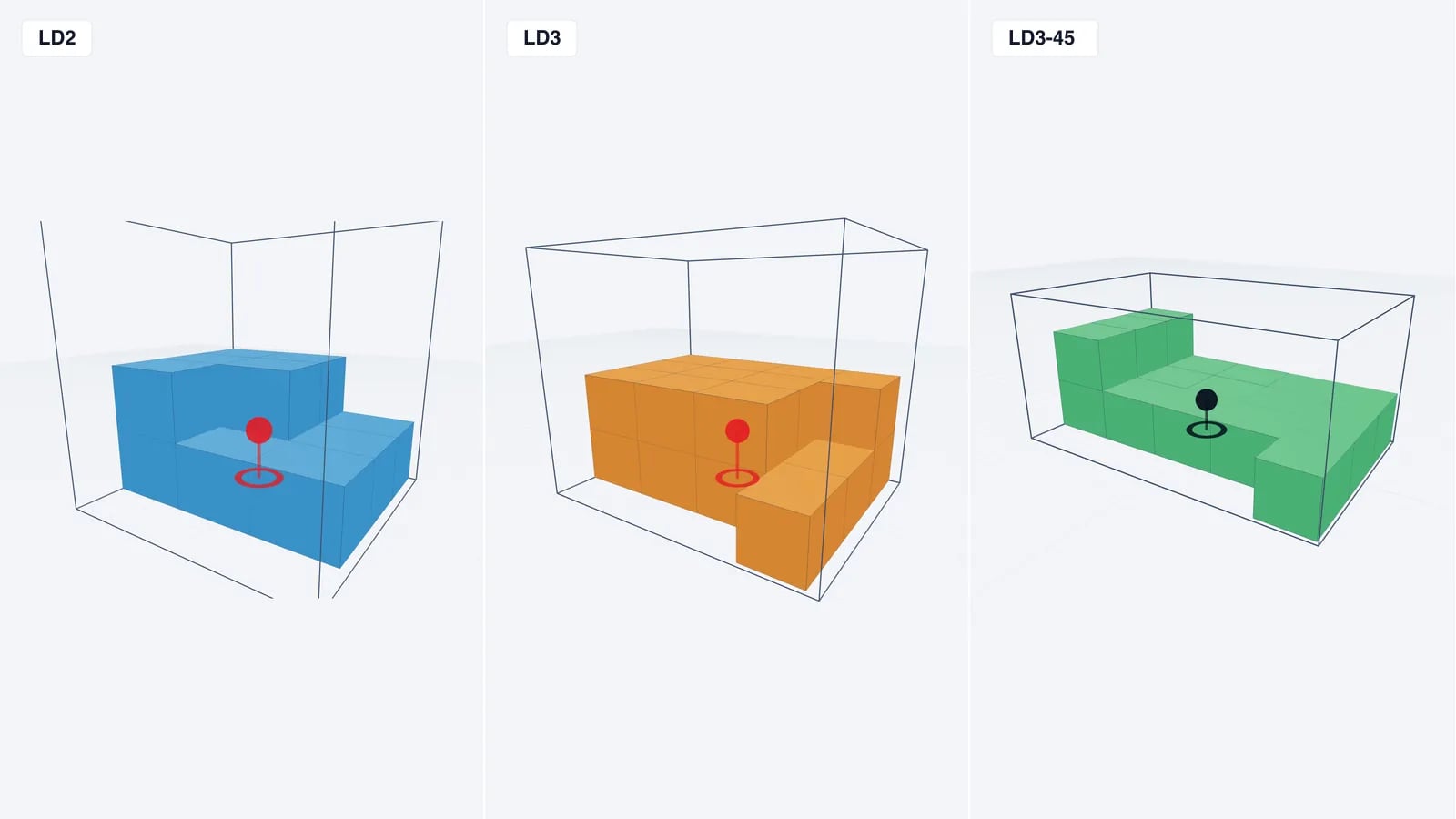
Air cargo · · 7 min read
ULD Types Explained: LD3, LD2, LD3-45, PMC and PAG Pallets
A practical guide to air cargo ULD types: LD3, LD3-45, LD2, LD6, PMC and PAG pallets, with typical dimensions, max gross weights and the aircraft that use them.
Read article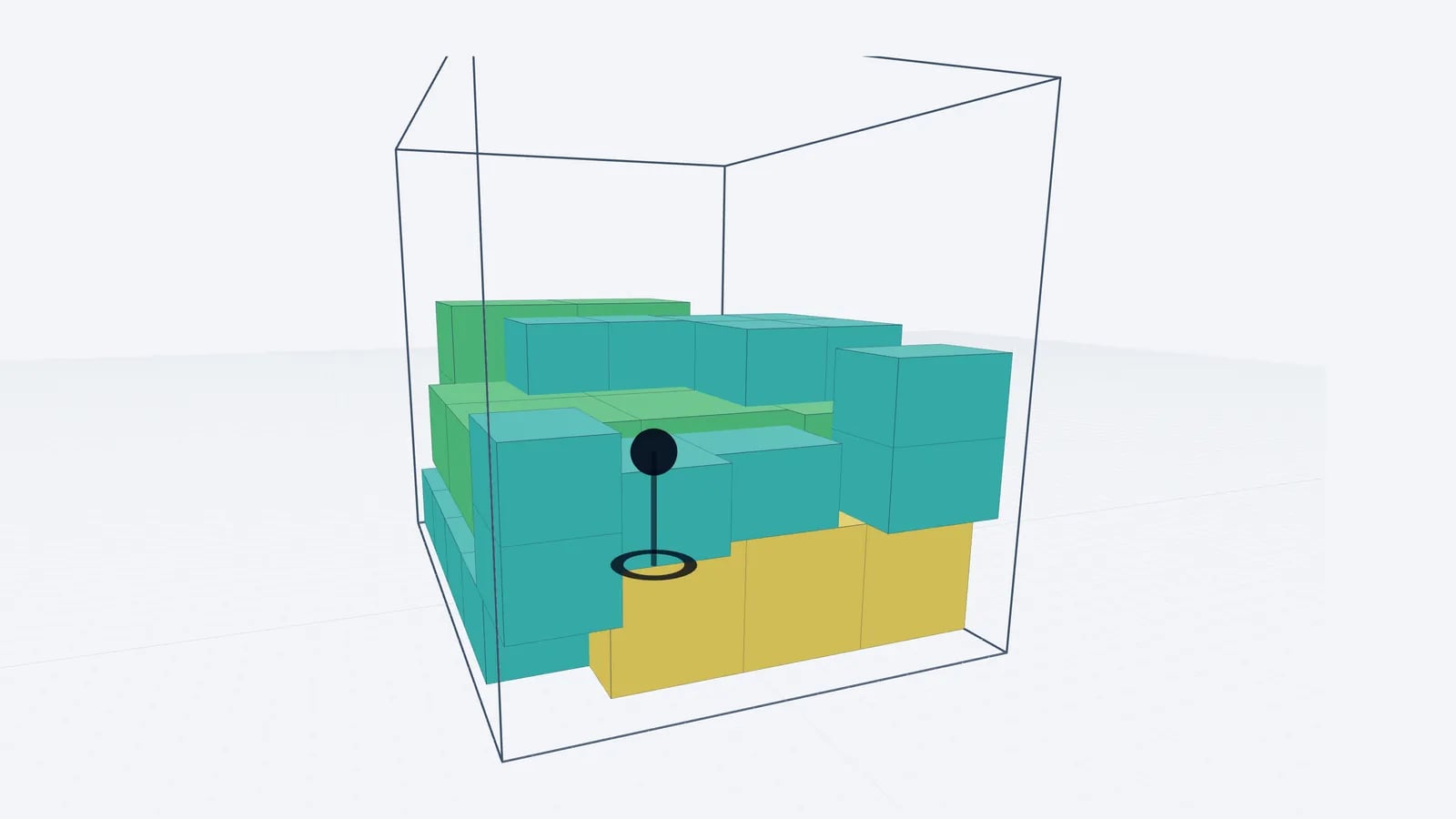
Air cargo · · 6 min read
Air Freight Packaging: How to Pack Cargo That Flies Cheaper
Air freight packaging done right: carton strength, sizes that suit ULDs, pallets and ISPM 15, labelling, and practical ways to cut volumetric weight.
Read article