Pallet Stacking Rules: Stackability, Weight on Top and Support
Which pallets can be stacked, how much weight can go on top and how much support a top pallet needs. Practical pallet stacking rules for trucks and containers.
Load planning basics · · 6 min read
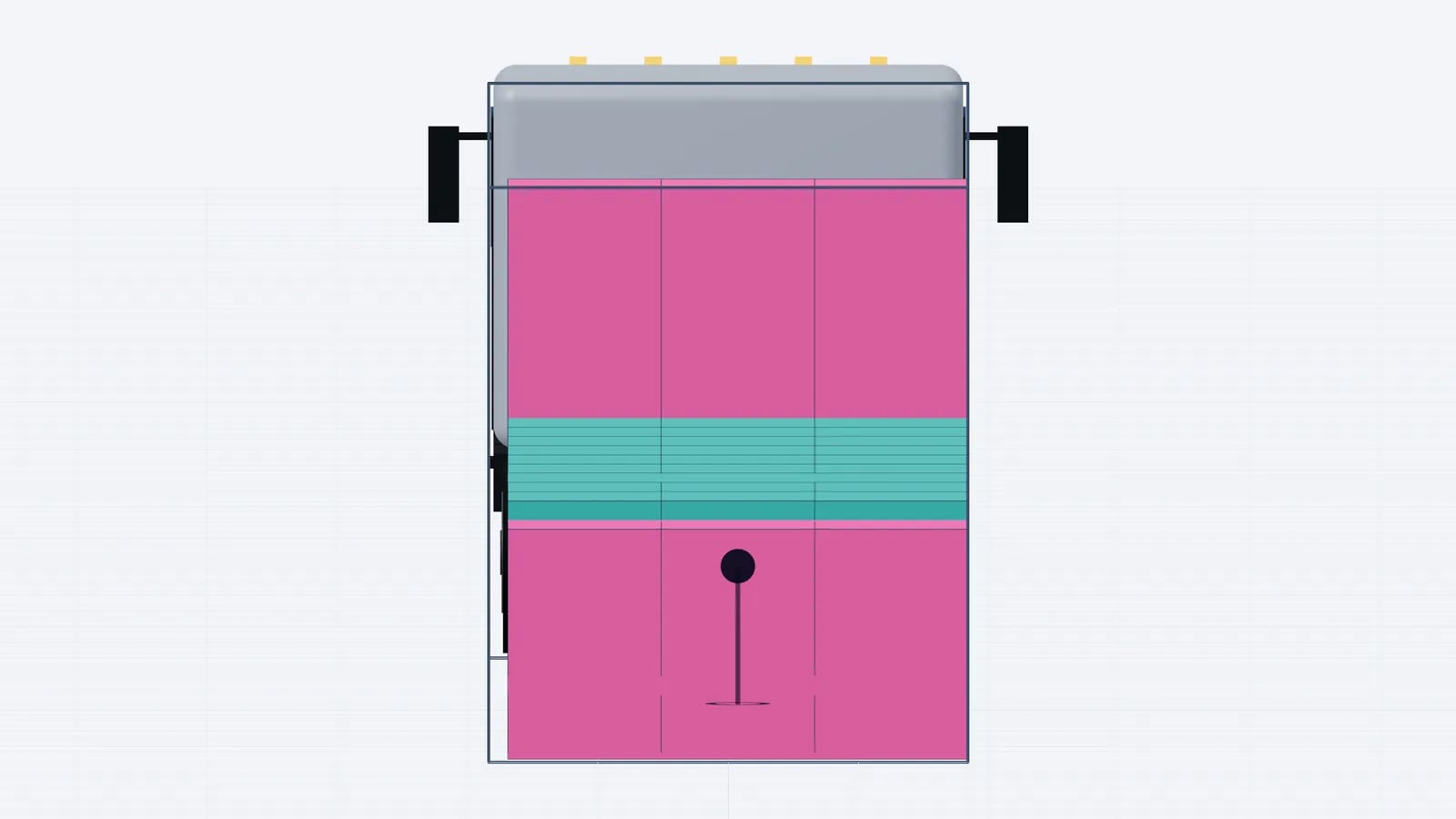
The basic pallet stacking rules are: only stack goods marked or agreed as stackable, never put more weight on a pallet than its goods can carry, keep heavier pallets underneath, make sure the top pallet is fully or almost fully supported, and respect orientation marks such as this side up. The pallet itself is rarely the weak point; the goods and the cartons on it usually are.
Stacking is the cheapest way to fit more on a truck, which is why it causes so much damage when it is done carelessly. Here is how to set clear rules and apply them to a load plan.
Stackable, non-stackable and limited-stack goods
Every item in a packing list should carry one of three stacking statuses:
Status: Stackable
- Meaning
- Anything within the height and weight limits can go on top
- Typical examples
- Pallets of tins, bottled drinks in shrink-wrapped trays, bags of cement on a strong deck
Status: Stackable with a limit
- Meaning
- A maximum weight on top, often only one more pallet
- Typical examples
- Cartons of packaged food, paper reels on pallets, boxed electronics
Status: Not stackable
- Meaning
- Nothing on top, ever
- Typical examples
- Glass, white goods, furniture, irregular tops, cones, liquids in thin containers, anything with a pointed top
Status: Top only
- Meaning
- Can go on top of others but must not carry anything
- Typical examples
- Light, bulky items such as insulation or empty packaging
| Status | Meaning | Typical examples |
|---|---|---|
| Stackable | Anything within the height and weight limits can go on top | Pallets of tins, bottled drinks in shrink-wrapped trays, bags of cement on a strong deck |
| Stackable with a limit | A maximum weight on top, often only one more pallet | Cartons of packaged food, paper reels on pallets, boxed electronics |
| Not stackable | Nothing on top, ever | Glass, white goods, furniture, irregular tops, cones, liquids in thin containers, anything with a pointed top |
| Top only | Can go on top of others but must not carry anything | Light, bulky items such as insulation or empty packaging |
In a load planner, this maps to a stackable yes/no flag and a maximum load on top. If you do not know, treat the item as not stackable and ask the shipper. A non-stackable flag costs floor space; a wrong stackable flag costs claims.
How much weight can go on top
The limit comes from the weakest layer in the stack, usually the cartons on the bottom pallet. Three sources give you a number:
- The shipper's specification. Many manufacturers state a maximum stacking load or maximum number of stacked pallets on the label or the product data sheet.
- Carton compression strength. Corrugated cartons are tested for box compression (often called BCT). The figure is measured in a laboratory and drops a lot with humidity, time under load and poor alignment, so packaging engineers apply a safety factor that is often several times the static load. Ask the packaging supplier rather than guessing.
- The pallet. For an EPAL Euro pallet, a safe working load of 1,500 kg is commonly quoted, with a higher figure for the bottom pallet of a stack on a flat floor. Check the pallet maker's data for your pallets.
Good to know
Road transport adds vibration, braking and cornering forces, so a stack that stands safely in a warehouse may crush on the road. Treat warehouse stacking limits as an upper bound for transport, not a target.
Support area: the top pallet must sit on something
A top pallet that bridges two lower pallets of different heights, or hangs half off the edge, concentrates its weight on a small area and can tip or crush the corner below. Common rules in planners and warehouses are:
- The top item should be supported over most of its base. Many planners use a minimum support of somewhere around 70–80% of the base area; some require full support for heavy items.
- Lower items supporting a top item should have the same height, so the top sits level.
- Do not put a larger footprint on a smaller one (an industrial pallet on a Euro pallet) unless the overhang is supported by a neighbouring stack of exactly the same height.
- Keep the corners of the top pallet over the corners or blocks of the bottom pallet where you can; that is where the pallet is strongest.
Orientation and handling marks
Stacking interacts with orientation rules. Watch for these marks on packages (the symbols are standardised in ISO 780):
| Mark | What it means for the plan |
|---|---|
| This way up (two arrows) | Do not rotate onto a side or upside down; turning on the floor is fine |
| Fragile (glass) | Usually nothing on top, or only light goods |
| Stacking limit by number | A maximum number of identical packages in the stack |
| Stacking limit by mass | A maximum weight that can be placed on the package |
| Do not stack | Nothing on top |
| Centre of gravity | Marks where the weight is; keep it low and supported |
Worked example: can these pallets be double-stacked?
Say you load a 13.6 m curtainsider (internal height 270 cm, payload 24,000 kg) with 40 Euro pallets of boxed household goods, each 125 cm high including the pallet and weighing 420 kg. The data sheet says the cartons can carry up to 500 kg on top.
- 1Height: 125 + 125 = 250 cm, which leaves 20 cm under a 270 cm roof for forklift clearance. Passes.
- 2Weight on top: one pallet of 420 kg on top, under the 500 kg limit. Passes, with 80 kg margin.
- 3Payload: 40 × 420 = 16,800 kg, under 24,000 kg. Passes.
- 4Floor space: 40 pallets double-stacked need 20 floor places, which is 20 × 0.4 = 8.0 loading metres. The trailer has 33 places, so there is room for 13 more single places at the doors.
- 5Distribution: 20 stacks at 840 kg each are spread over the first 8 m of the trailer (about 6.7 rows of 3). Better to spread them over the full length with the other cargo, so the weight is not all forward of the trailer axles; see weight distribution in a trailer.
Now say the top pallet weighed 560 kg. The height and payload still pass, but the 500 kg limit fails. The fix is to put the heavier pallets underneath and stack only pallets of 500 kg or less on top, or to not stack at all.
Typical settings for common goods
Use these as starting points for your item master and confirm with the shipper:
Goods: Bottled water, shrink trays
- Stackable
- Yes
- Typical max load on top
- One similar pallet, if the trays are full and square
- Rotation
- Floor only
Goods: Packaged food in cartons
- Stackable
- Usually
- Typical max load on top
- Lighter pallets only; check the carton spec
- Rotation
- Floor only
Goods: Paint, chemicals in drums
- Stackable
- Often, with boards between tiers
- Typical max load on top
- Per drum maker
- Rotation
- Upright only
Goods: White goods
- Stackable
- No
- Typical max load on top
- Nothing
- Rotation
- Upright only
Goods: Furniture, flat-pack
- Stackable
- Sometimes
- Typical max load on top
- Light goods only
- Rotation
- Depends on pack
Goods: Machinery crates
- Stackable
- Rarely
- Typical max load on top
- Only if the crate is designed for it
- Rotation
- Upright only
| Goods | Stackable | Typical max load on top | Rotation |
|---|---|---|---|
| Bottled water, shrink trays | Yes | One similar pallet, if the trays are full and square | Floor only |
| Packaged food in cartons | Usually | Lighter pallets only; check the carton spec | Floor only |
| Paint, chemicals in drums | Often, with boards between tiers | Per drum maker | Upright only |
| White goods | No | Nothing | Upright only |
| Furniture, flat-pack | Sometimes | Light goods only | Depends on pack |
| Machinery crates | Rarely | Only if the crate is designed for it | Upright only |
Tip
In EveryLoading, each cargo row has settings for rotation, nothing on top, max in one stack, max kg on top and minimum support when stacked (see cargo settings); the optimizer then only stacks where those rules allow.
For the height and stability side of stacking in a truck, see double stacking pallets in trailers. For checking how many pallets that gives you in total, see how many Euro pallets fit in a trailer.
Frequently asked questions
Can you stack Euro pallets in a truck?
Yes, if the goods on the bottom pallet can carry the top pallet, both fit under the internal height with clearance, and total weight stays under payload. The goods usually set the limit, not the pallet.
How high can pallets be stacked in a trailer?
A standard trailer is about 2.7 m high inside, so two pallets of up to roughly 1.3 m each. A mega trailer with about 3 m inside allows taller double stacks.
Should heavy pallets go on top or underneath?
Underneath. Heavy pallets on top raise the centre of gravity and can crush the goods below.
What does non-stackable mean in freight?
Nothing may be placed on the item. Carriers often charge non-stackable freight by floor space or loading metres because the space above it cannot be sold.
Keep reading
Load planning basics · · 5 min read
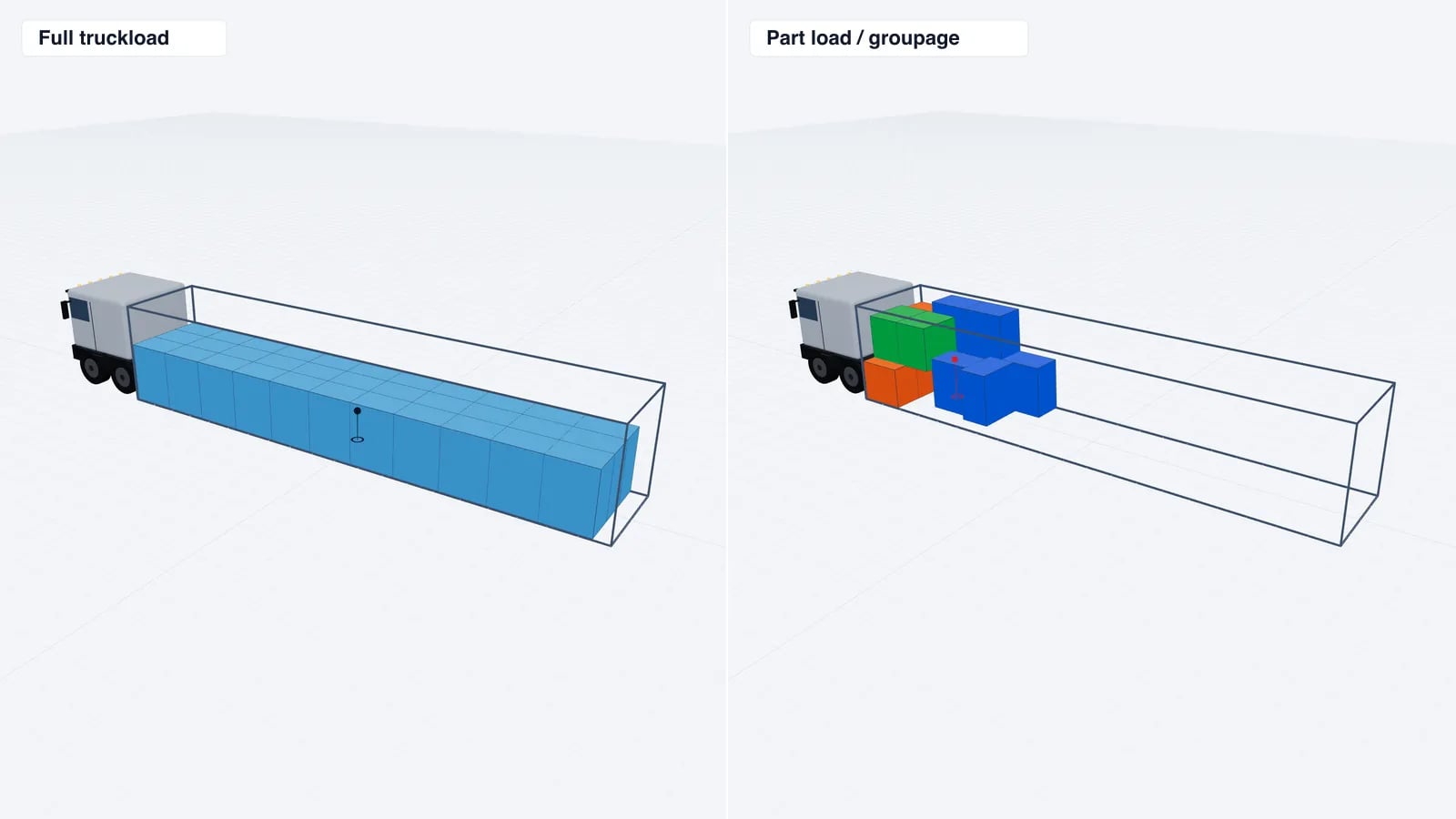
FTL vs LTL: Full Truckload, Part Load or Groupage?
FTL books a whole truck; LTL and groupage share it with other shippers. Compare cost, speed and handling, see how LDM drives LTL price and find your break-even.
Read article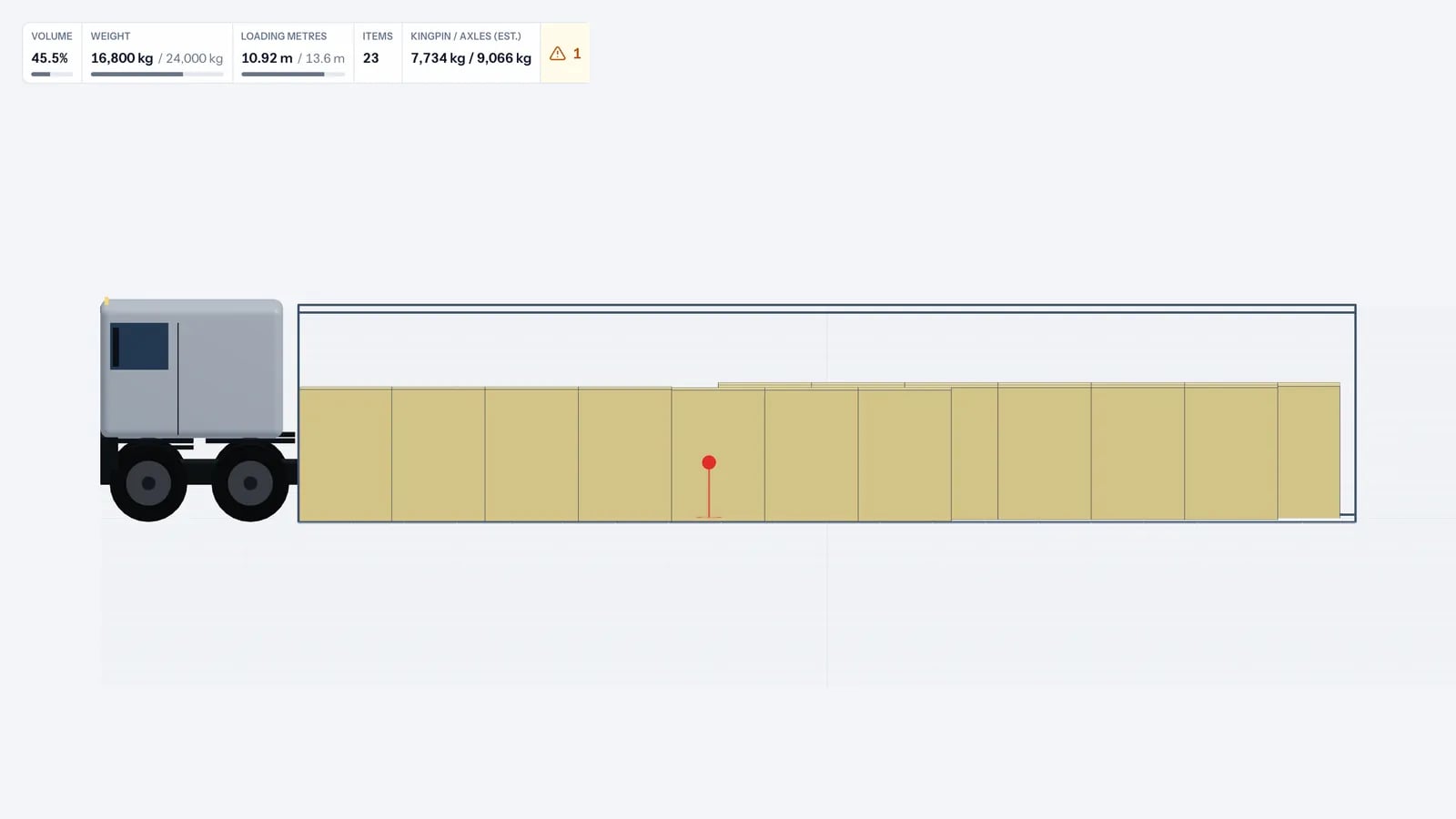
Load planning basics · · 6 min read
Weight Distribution in a Trailer: Axle Loads Made Simple
Where you put heavy cargo decides the load on each axle. Learn how trailer weight distribution works, how to estimate axle loads and how to avoid overloading.
Read article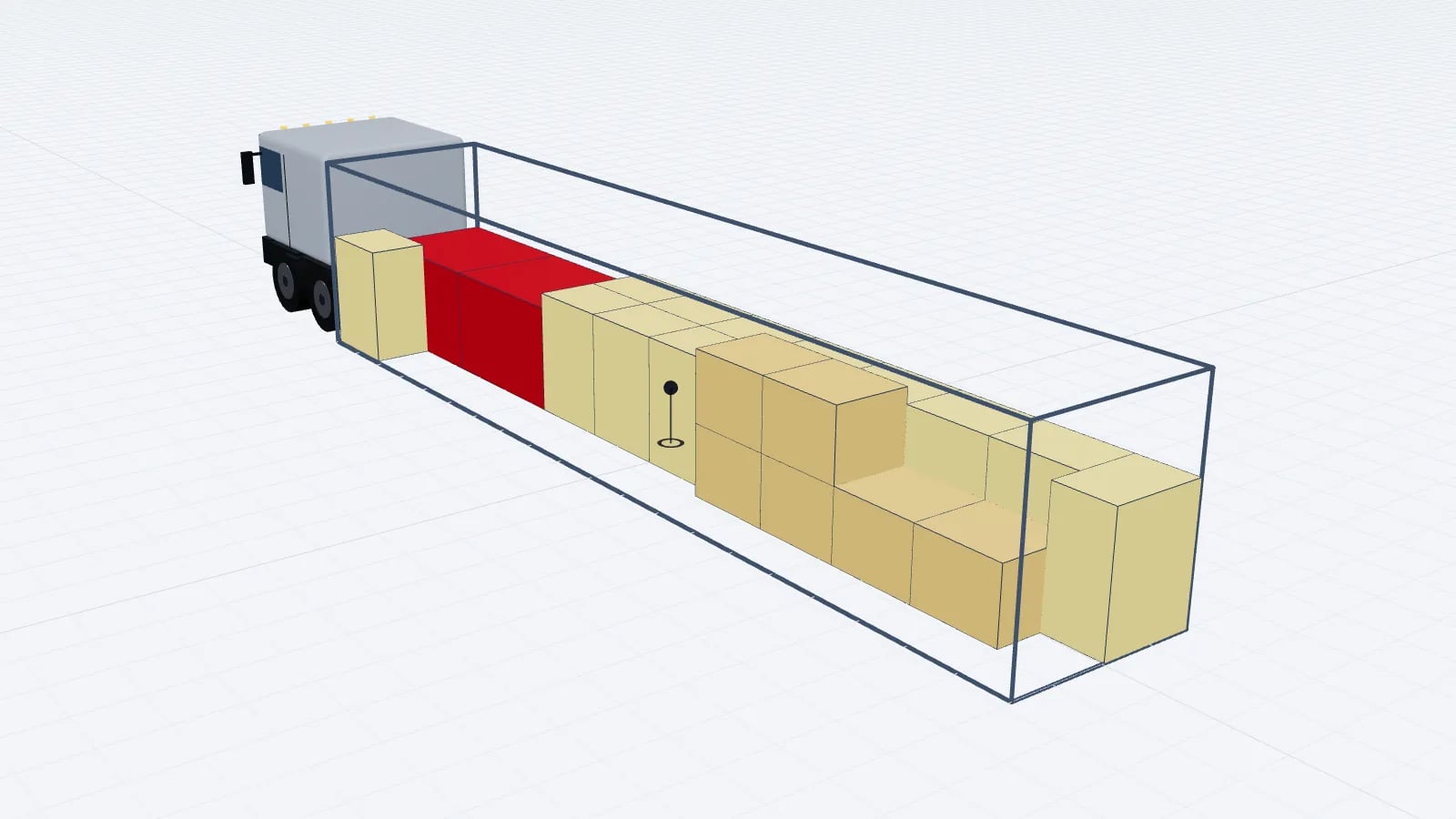
Load planning basics · · 5 min read
Load Centre of Gravity: How to Calculate It for a Truck Load
The centre of gravity of a load is the weighted average of every item's position. Learn the formula, a worked truck example and checks for lateral offset.
Read article