Double Stacking Pallets in Trailers: Height, Weight, Stability
When you can double stack pallets in a trailer: maximum pallet heights in standard and mega trailers, weight on the bottom pallet, payload and stability.
Road freight · · 5 min read
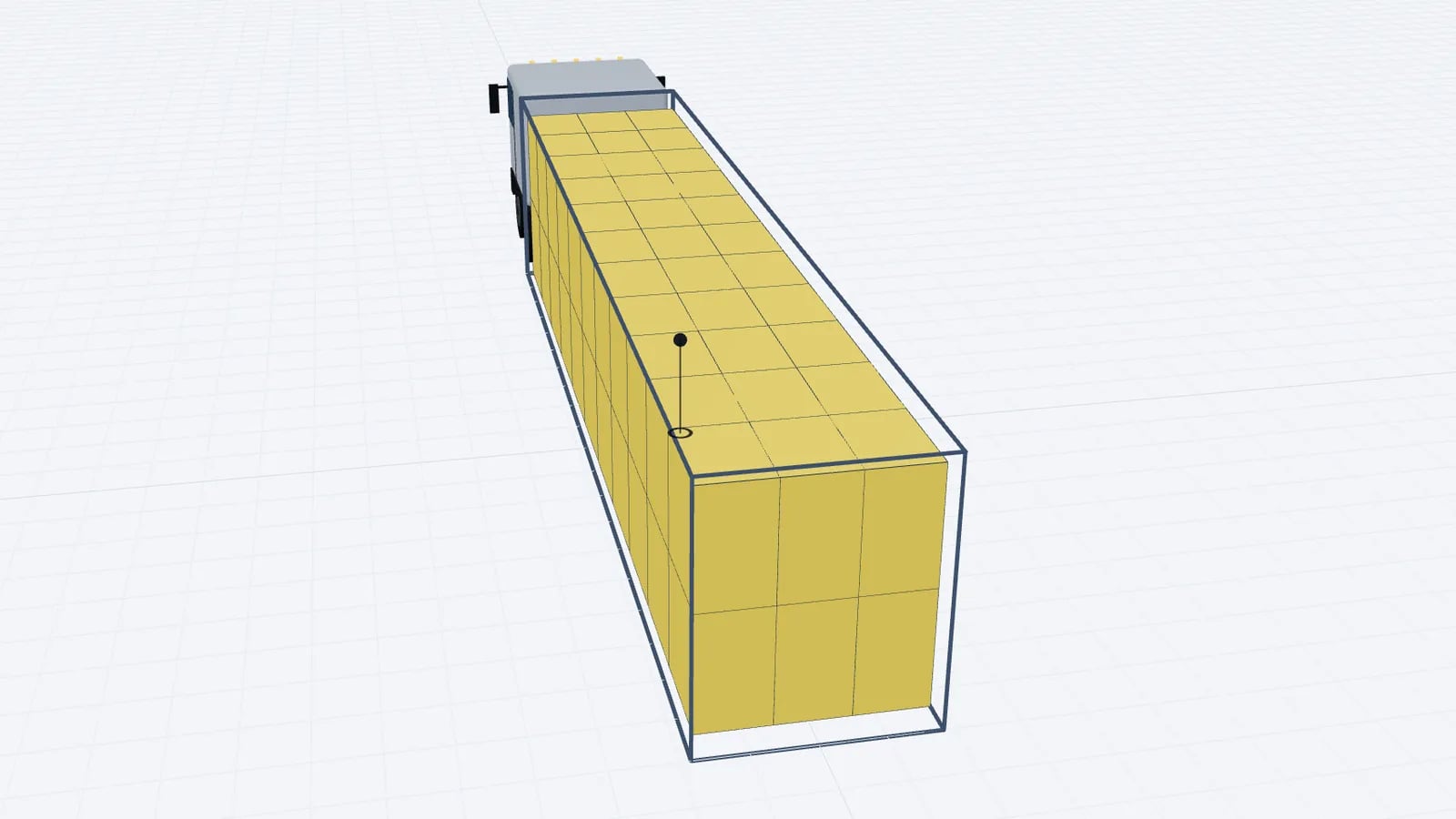
Double stacking pallets means loading a second pallet on top of each floor pallet, which can double a trailer's pallet count from 33 to 66 Euro pallets. It works when both pallets together fit under the internal height with a little clearance, the bottom pallet's packaging can carry the top one, and the total stays within payload.
Get any of those three wrong and you either cannot close the doors, crush the bottom layer, or overload the truck.
Check 1: height
Add the two pallet heights (including the pallet bases, about 14.4 cm for a Euro pallet) and leave clearance so the forklift can lift the top pallet over the bottom one and set it down. Around 5 cm is a common working figure; more if the load is uneven or the roof has crossbars.
Trailer: Standard curtainsider or box
- Internal height (typical)
- 2.65–2.75 m
- Max height per pallet for a double stack (about 5 cm clearance)
- about 1.30–1.35 m
Trailer: Mega trailer
- Internal height (typical)
- 2.95–3.0 m
- Max height per pallet for a double stack (about 5 cm clearance)
- about 1.45–1.47 m
Trailer: Reefer
- Internal height (typical)
- 2.5–2.65 m, less to the load line
- Max height per pallet for a double stack (about 5 cm clearance)
- lower; check the airflow limit
Trailer: 40' high cube container
- Internal height (typical)
- 2.69 m (door 2.58 m)
- Max height per pallet for a double stack (about 5 cm clearance)
- about 1.26 m, limited by the door
| Trailer | Internal height (typical) | Max height per pallet for a double stack (about 5 cm clearance) |
|---|---|---|
| Standard curtainsider or box | 2.65–2.75 m | about 1.30–1.35 m |
| Mega trailer | 2.95–3.0 m | about 1.45–1.47 m |
| Reefer | 2.5–2.65 m, less to the load line | lower; check the airflow limit |
| 40' high cube container | 2.69 m (door 2.58 m) | about 1.26 m, limited by the door |
Check the lowest point the pallet has to pass, not only the internal height: the rear door frame, the roof rails of a curtainsider, or the gooseneck of a mega trailer. For trailer heights, see semi trailer dimensions.
Check 2: weight on the bottom pallet
The bottom pallet carries the full weight of the top one, plus the dynamic loads of braking, bumps and cornering. Whether it can is a property of the packaging, not the pallet: cartons, bottles in shrink wrap, crates and drums all have very different stacking strength.
- Use the packaging's rated top load or stacking test where the shipper has one, and plan below it.
- As a rule, put the heavier pallet at the bottom. A heavy pallet on a light one is the most common cause of crushed loads.
- Never stack on top of pallets with uneven tops, overhanging goods, or soft goods such as bags that deform.
- Watch for "stackable in the warehouse" ratings. Static racking strength is not the same as surviving 800 km on a truck.
Setting stack limits per item is covered in pallet stacking rules.
Check 3: payload
Doubling the pallet count doubles the weight. With a payload of about 24,000 kg, 66 Euro pallets can average at most 24,000 ÷ 66 ≈ 364 kg each. Many double-stackable loads are well below that (packaging, light consumer goods, empties), but anything dense runs out of payload long before the second layer is complete.
Also watch where the stacks go. A double-stacked block concentrated at the front of the trailer can overload the tractor's drive axle even within payload; see weight distribution in a trailer.
Worked example: 52 pallets of household goods
Say you have 52 Euro pallets of boxed household goods, each 1.25 m high (including the pallet) and 380 kg, all rated to carry one pallet of equal weight. The trailer is a standard 13.6 × 2.48 × 2.70 m curtainsider with a 24,000 kg payload.
- 1Height: 1.25 + 1.25 = 2.50 m, leaving 20 cm under 2.70 m. Double stacking works.
- 2Positions: 52 ÷ 2 = 26 floor positions, using 26 × 0.4 = 10.4 loading metres.
- 3Weight: 52 × 380 = 19,760 kg, which leaves 4,240 kg of payload.
- 4Free space: 13.6 − 10.4 = 3.2 m of floor, or 8 more floor positions. At 380 kg each, those 8 positions could take 8 single pallets (3,040 kg) but not 16 (6,080 kg): payload, not space, would stop a full second layer.
- 5Placement: spread the stacks evenly from the front wall rather than leaving all free space at the doors if you will not fill it, and secure the rear of the block.
Stability in transit
- A double stack is taller and so tips more easily sideways. Keep stacks in tight blocks so they support each other, and avoid single tall stacks standing alone.
- Make sure the top pallet sits squarely on the bottom one, with the pallet blocks resting on a flat, firm surface. Slip sheets or board between layers help with soft tops.
- Stretch-wrap both pallets well; the wrap is what keeps the cartons in shape under the top load.
- Use straps or load bars on the top layer where it is not blocked by the walls or other stacks.
- Prefer the same footprint top and bottom. A smaller pallet on a larger one is fine if the load path is supported; a larger pallet overhanging a smaller one is not.
- For the securing principles behind this, see load securing basics.
When not to double-stack
- Fragile goods, glass and items marked "do not stack".
- Reefer loads where the stack would block the airflow above the cargo.
- Dense goods where the second layer would break the payload or axle limits.
- Pallets with poor or damaged bases, or loads that lean.
- Multi-drop runs where the top pallet belongs to a different stop than the bottom one, unless the delivery order allows it.
Tip
In EveryLoading, items are stackable unless you say otherwise. In a row's settings you can turn off Can be stacked on other items, tick Nothing may be placed on top, or set Max in one stack and Max kg on top; see cargo settings. The optimizer then double-stacks where height, payload and these rules allow.
Frequently asked questions
How many pallets fit in a trailer if double stacked?
Up to 66 Euro pallets in a standard 13.6 m trailer (33 floor positions × 2), if the height and payload allow it. In practice weight often limits it first.
How high can pallets be to double stack in a truck?
In a 2.7 m trailer, about 1.30–1.35 m each including the pallet; in a 3.0 m mega trailer, about 1.45–1.47 m. Always check the door frame and roof rails.
Which pallet should go on the bottom?
The heavier, stronger pallet, with a flat, stable top. The packaging of the bottom pallet must be able to carry the top one during transport, not just in the warehouse.
Does double stacking affect axle loads?
Yes. Stacks concentrate weight on a smaller part of the floor, so a block of double stacks at the front wall can overload the drive axle even when total payload is fine.
Keep reading
Road freight · · 5 min read
Multi Drop Loading: How to Plan a Truck for Several Stops
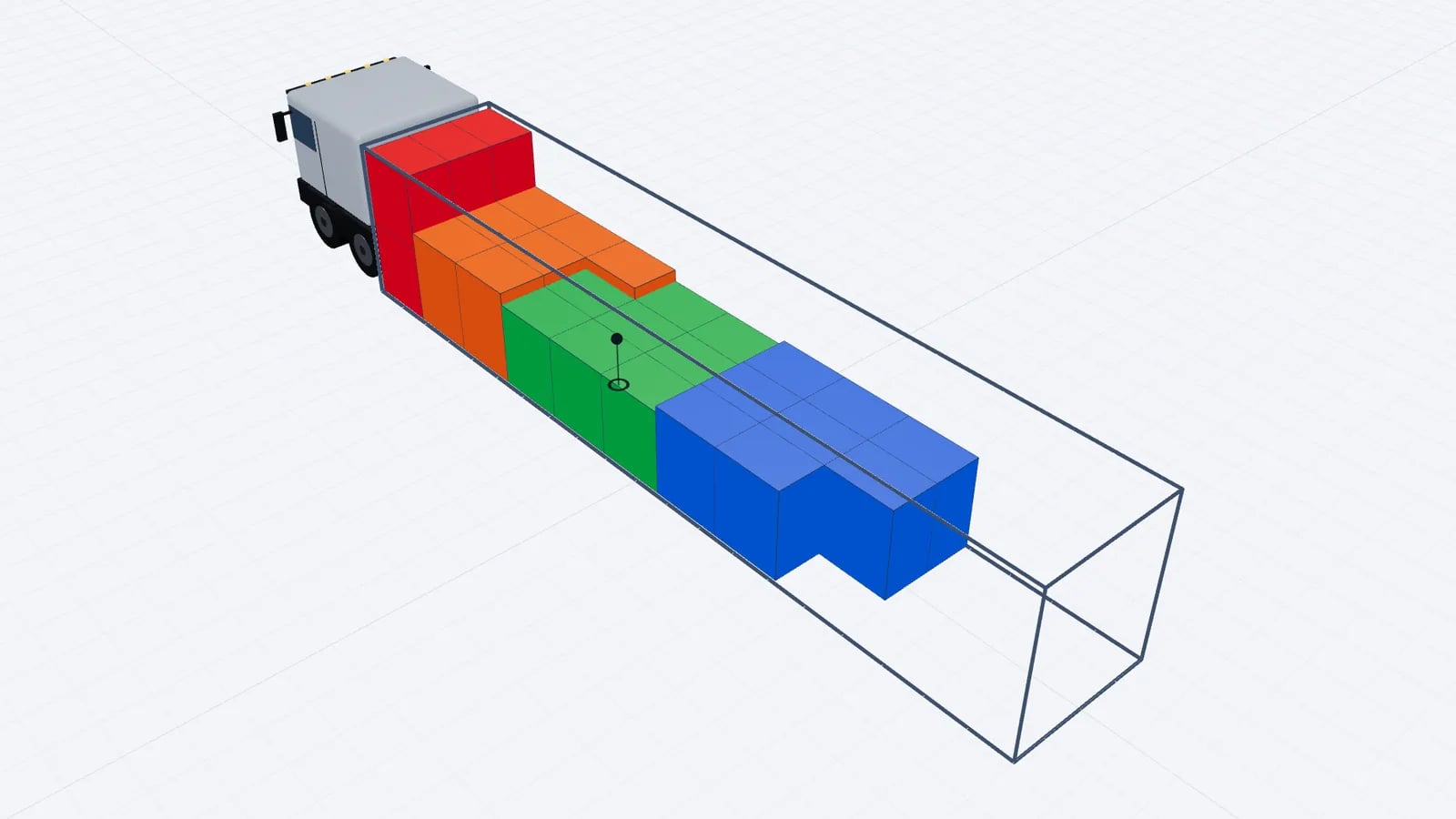
Plan a multi-drop truck so every stop unloads without moving other cargo: LIFO order, lanes, stop numbers, axle loads after each drop and a worked example.
Read article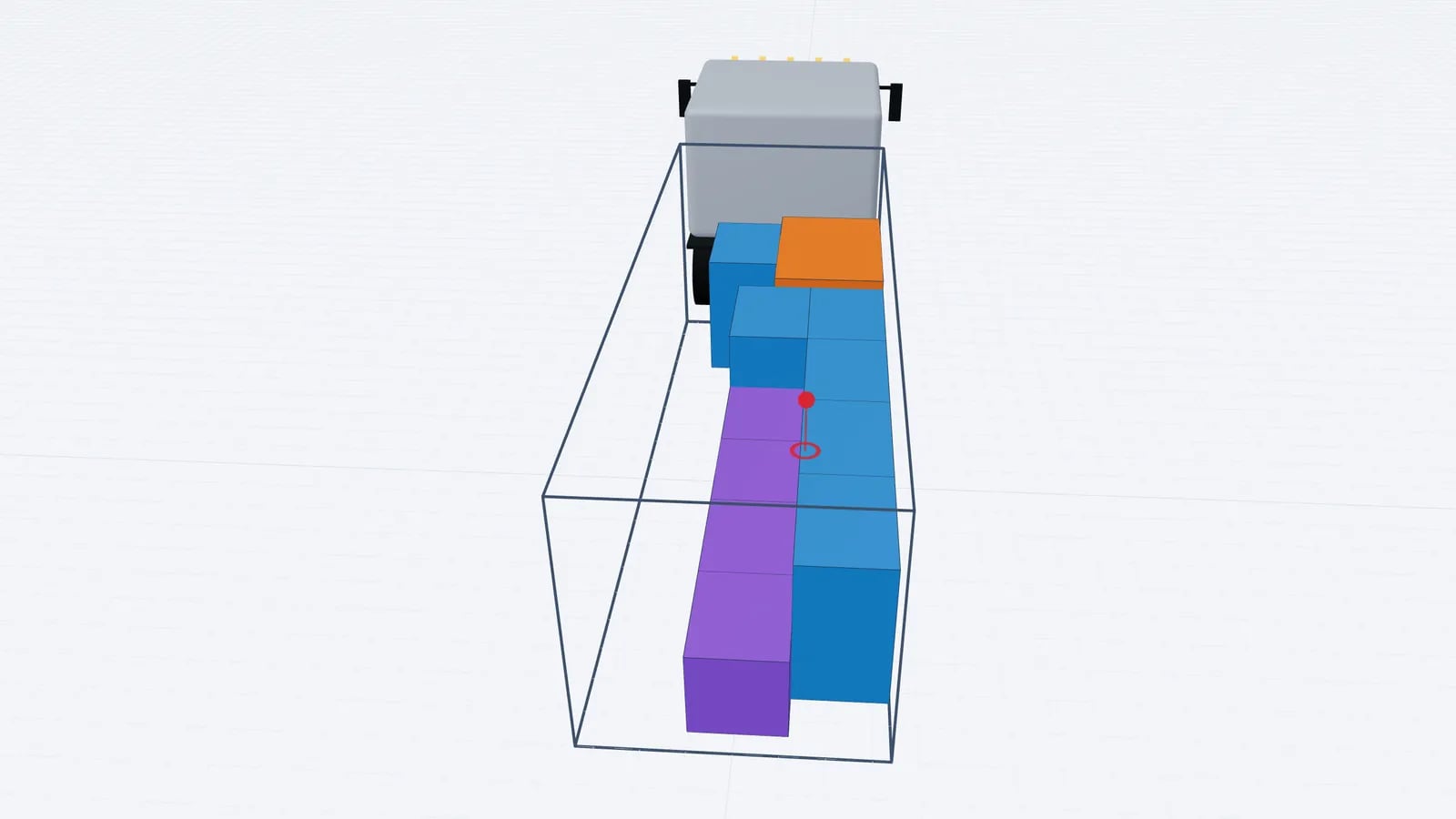
Road freight · · 5 min read
Load Securing Basics: EN 12195-1, Friction, Lashing, Blocking
The principles of load securing under EN 12195-1: design forces, friction, blocking, lashing, body strength, and how a gap-free load plan cuts securing effort.
Read article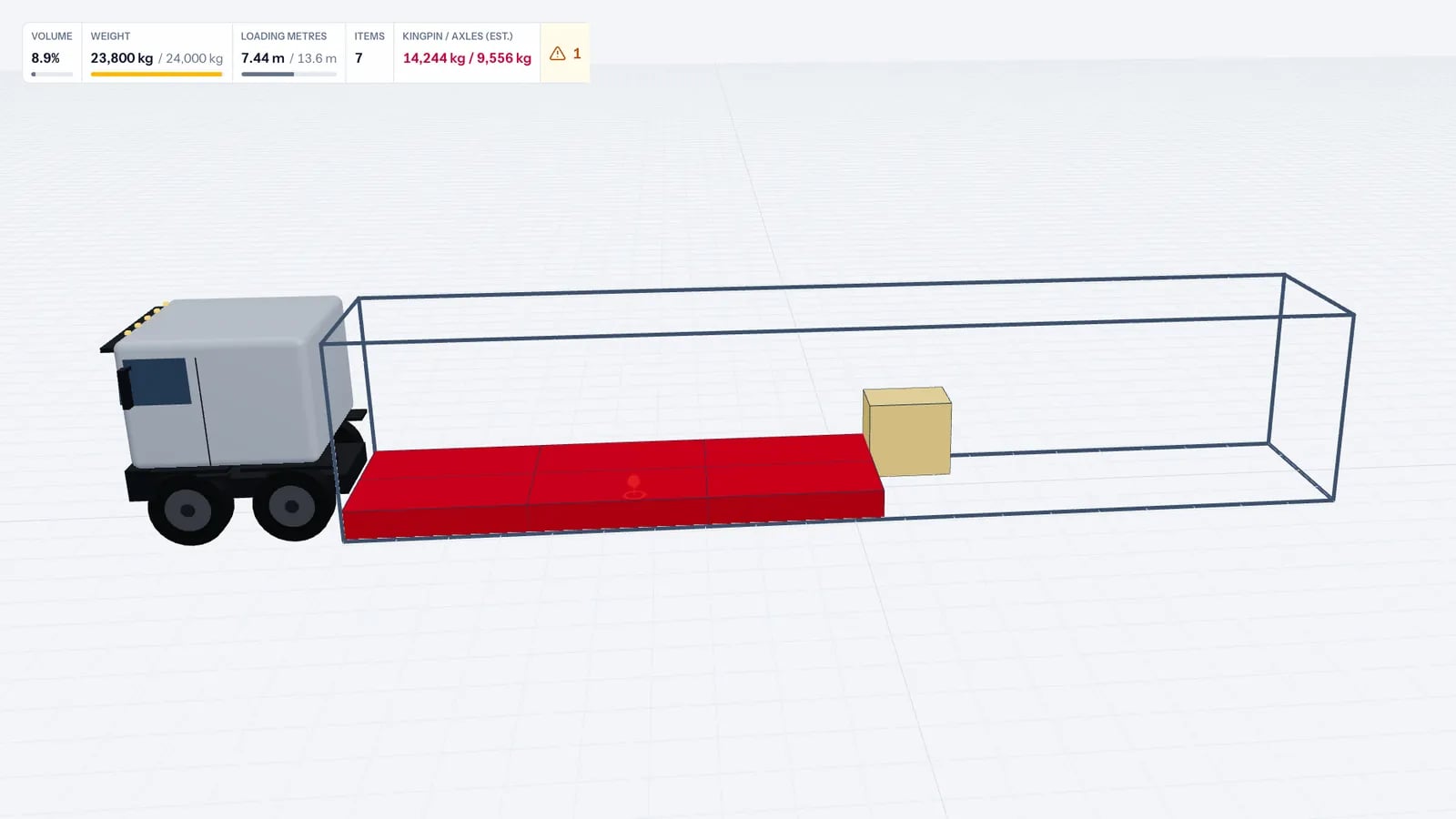
Road freight · · 5 min read
Overloaded Truck Fines: Checks to Make Before Dispatch
Avoid overloaded truck fines with a pre-dispatch routine: real cargo weights, payload margin, axle-load estimates, partial-load traps and weighbridge checks.
Read article