Load Securing Basics: EN 12195-1, Friction, Lashing, Blocking
The principles of load securing under EN 12195-1: design forces, friction, blocking, lashing, body strength, and how a gap-free load plan cuts securing effort.
Road freight · · 5 min read
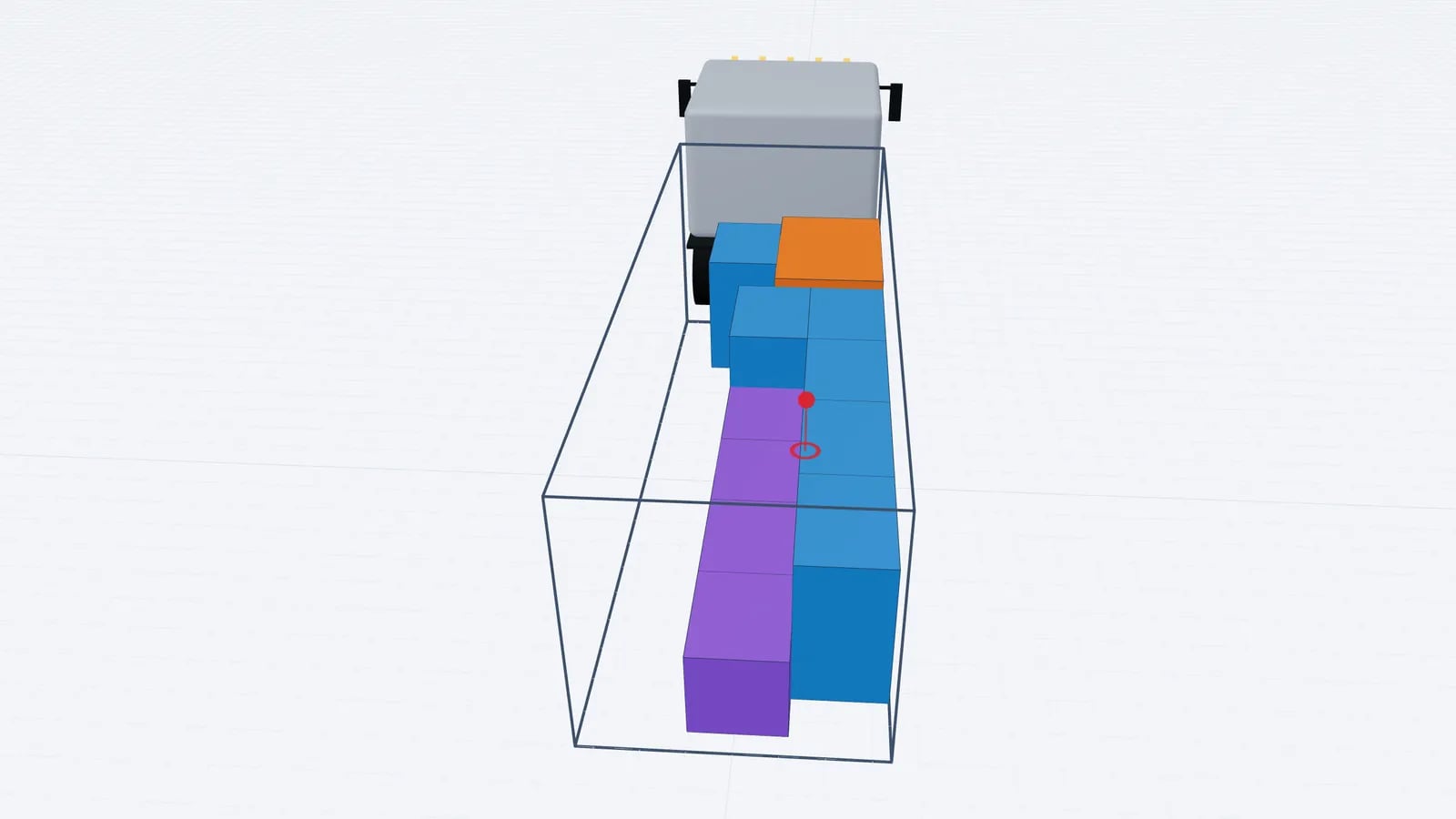
Load securing means stopping cargo from sliding, tipping or shifting under the forces of normal driving, including emergency braking and sharp turns. The European standard EN 12195-1 sets the design forces for road transport (0.8 g forwards, 0.5 g backwards and 0.5 g sideways) and the methods for calculating restraint by friction, blocking and lashing.
Good to know
This is a planning overview, not legal or engineering advice. Load securing rules and responsibilities are set by national law, and the European Commission's best-practice guidelines on cargo securing for road transport are a good reference. Use the standard, the vehicle certificates and trained staff for real calculations.
The forces you have to resist
EN 12195-1 expresses the forces as fractions of the cargo's weight. For road transport:
Direction: Forwards
- Design acceleration
- 0.8 g
- What causes it
- Emergency braking
Direction: Backwards
- Design acceleration
- 0.5 g
- What causes it
- Pulling away, reversing into a dock, braking while reversing
Direction: Sideways
- Design acceleration
- 0.5 g
- What causes it
- Cornering, roundabouts, lane changes
| Direction | Design acceleration | What causes it |
|---|---|---|
| Forwards | 0.8 g | Emergency braking |
| Backwards | 0.5 g | Pulling away, reversing into a dock, braking while reversing |
| Sideways | 0.5 g | Cornering, roundabouts, lane changes |
In plain terms, a 1,000 kg pallet must be held as if a force equal to 800 kg were pushing it towards the cab. Tall, narrow items are also checked for tipping, not only sliding, with additional margins in the standard.
Friction: helpful, but never enough on its own
Friction between the cargo and the floor resists part of that force. The friction coefficient (μ) depends on the two surfaces and their condition; the standard gives tabulated values. A wooden pallet on a clean, dry floor gives modest friction, and wet, icy, oily or dusty floors give much less. Anti-slip mats raise friction considerably, commonly to around 0.6, which is why they are one of the cheapest securing tools available.
In a simplified model, the force left for blocking or lashing is the weight multiplied by (design acceleration − μ). Say an 800 kg pallet sits on a floor with μ = 0.3:
- Forwards: 800 kg × 9.81 m/s² × (0.8 − 0.3) ≈ 3,920 N, about 392 daN to be taken by blocking or lashing.
- Sideways: 800 × 9.81 × (0.5 − 0.3) ≈ 1,570 N, about 157 daN.
- With an anti-slip mat at μ = 0.6, forwards drops to 800 × 9.81 × 0.2 ≈ 157 daN, and sideways friction alone exceeds the 0.5 g design force in this simplified model.
The real calculation in EN 12195-1 adds safety factors and depends on the lashing method, so treat these figures as an illustration of why friction matters, not as a securing plan.
The three securing methods
- Blocking (form-locking): the cargo rests against something that cannot move, such as the headboard, side walls, stanchions, load bars, other cargo or void fillers. Blocking is usually the most effective and the quickest method, but only if there is no gap.
- Friction (top-over) lashing: straps over the top of the cargo pull it down onto the floor, increasing friction. The straps' standard tension force (STF, on the label) matters more than their lashing capacity here.
- Direct lashing: straps, chains or loops connect the cargo directly to lashing points, so the lashing itself takes the force. The lashing capacity (LC) and angles matter. Typical for machinery and heavy single items.
Most loads combine them: a block of pallets against the headboard, anti-slip mats under heavy items, and a few straps or load bars at the rear of the block.
Vehicle body strength: EN 12642
Whether the body itself can be used for blocking depends on how it was built and certified. Bodies tested to EN 12642 Code XL are certified for the headboard to withstand 50% of payload, the side walls 40% and the rear wall 30%, provided the cargo fills the space without gaps as described in the certificate. Code L bodies have lower values, and standard curtains on many curtainsiders give little or no side restraint. Check the certificate for the specific trailer before you rely on its walls.
For example, a full load of 33 pallets at 700 kg each is 23,100 kg. Using the same simplified model with μ = 0.3, the forward force to block is 23,100 × 9.81 × 0.5 ≈ 113,300 N, about 11,330 daN. An XL headboard on a trailer with a 24,000 kg payload is rated for 50% of payload, 12,000 kg or about 11,770 daN, so in this illustration the block can lean on the headboard. Leave a gap in front and that calculation no longer holds.
How a good load plan reduces securing effort
Gaps are the enemy. Cargo that can move even 10–20 cm before it meets resistance arrives with momentum, so the impact on straps, walls and neighbouring goods is far higher than the static force. A load plan that removes gaps makes the cargo secure itself by blocking.
- Load against the headboard and close up rows; avoid a single row standing on its own in the middle of the floor.
- Fill the width. Three Euro pallets in 2.45–2.48 m leave only a few centimetres; two industrial pallets crosswise likewise. Odd sizes that leave side gaps need void fill or load bars.
- Keep stacks even. A block with steps in height is harder to secure with top-over lashings than a flat-topped block. See pallet stacking rules.
- Plan heavy items low and in the middle of the width, with anti-slip mats under them.
- Secure each drop. On multi-drop runs, the remaining cargo must stay blocked after each delivery; see multi drop loading.
- Reduce empty space. A full, well-packed load is easier to secure than a half load; see reducing empty space in trucks.
Quick pre-departure checks
- 1Floor clean and dry; anti-slip mats in place under heavy items.
- 2Cargo against the headboard, or the gap filled.
- 3No gaps between rows, or gaps filled with void fill, empty pallets or load bars.
- 4Lashings tight, with edge protectors on cartons and soft goods, and no damaged straps.
- 5Rear of the load blocked or lashed so it cannot roll back towards the doors.
- 6Recheck after the first few kilometres and after each drop.
Tip
A 3D plan with the exact item positions makes gaps visible before loading. In EveryLoading you can see the top and side views and hand the driver a PDF of the load; see views and drawings.
Frequently asked questions
What does EN 12195-1 require?
It defines the design forces for securing cargo in transport (for road: 0.8 g forwards, 0.5 g backwards and sideways) and the methods for calculating friction, blocking and lashing. National law decides how it is applied and who is responsible.
Is friction enough to secure a load?
Rarely on its own: with typical floor friction, there is still a large forward force to resist. Anti-slip mats help a lot, combined with blocking or lashing.
What is the difference between LC and STF on a lashing strap?
LC (lashing capacity) is the maximum force the strap may take in direct lashing. STF (standard tension force) is the tension a ratchet achieves with normal hand force, which is what counts in top-over lashing.
Can I rely on the trailer walls to hold the load?
Only if the body is certified for it, for example to EN 12642 Code XL, and the cargo is loaded as the certificate describes, normally without gaps. Standard curtains give little side restraint.
Keep reading
Road freight · · 5 min read
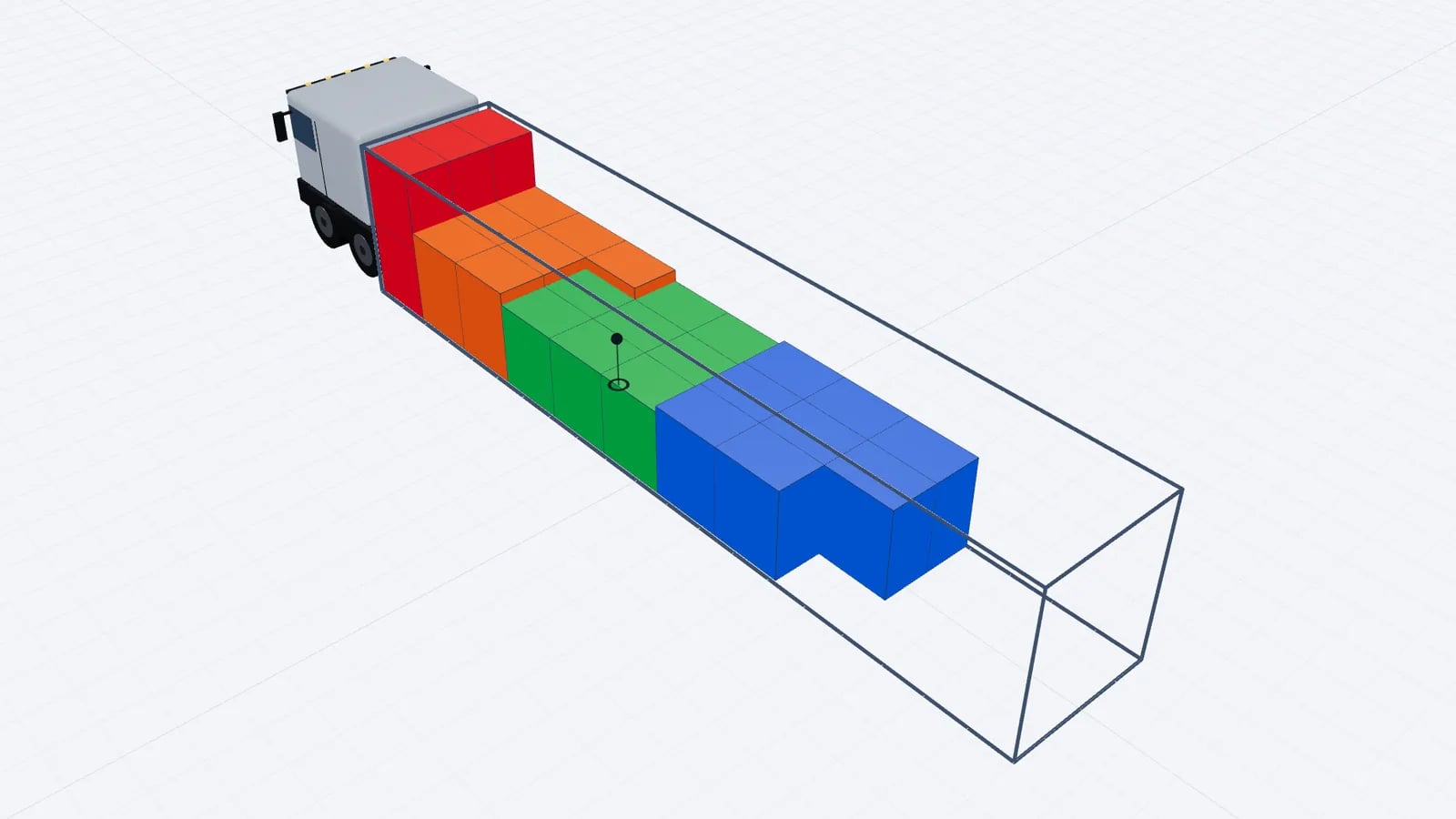
Multi Drop Loading: How to Plan a Truck for Several Stops
Plan a multi-drop truck so every stop unloads without moving other cargo: LIFO order, lanes, stop numbers, axle loads after each drop and a worked example.
Read article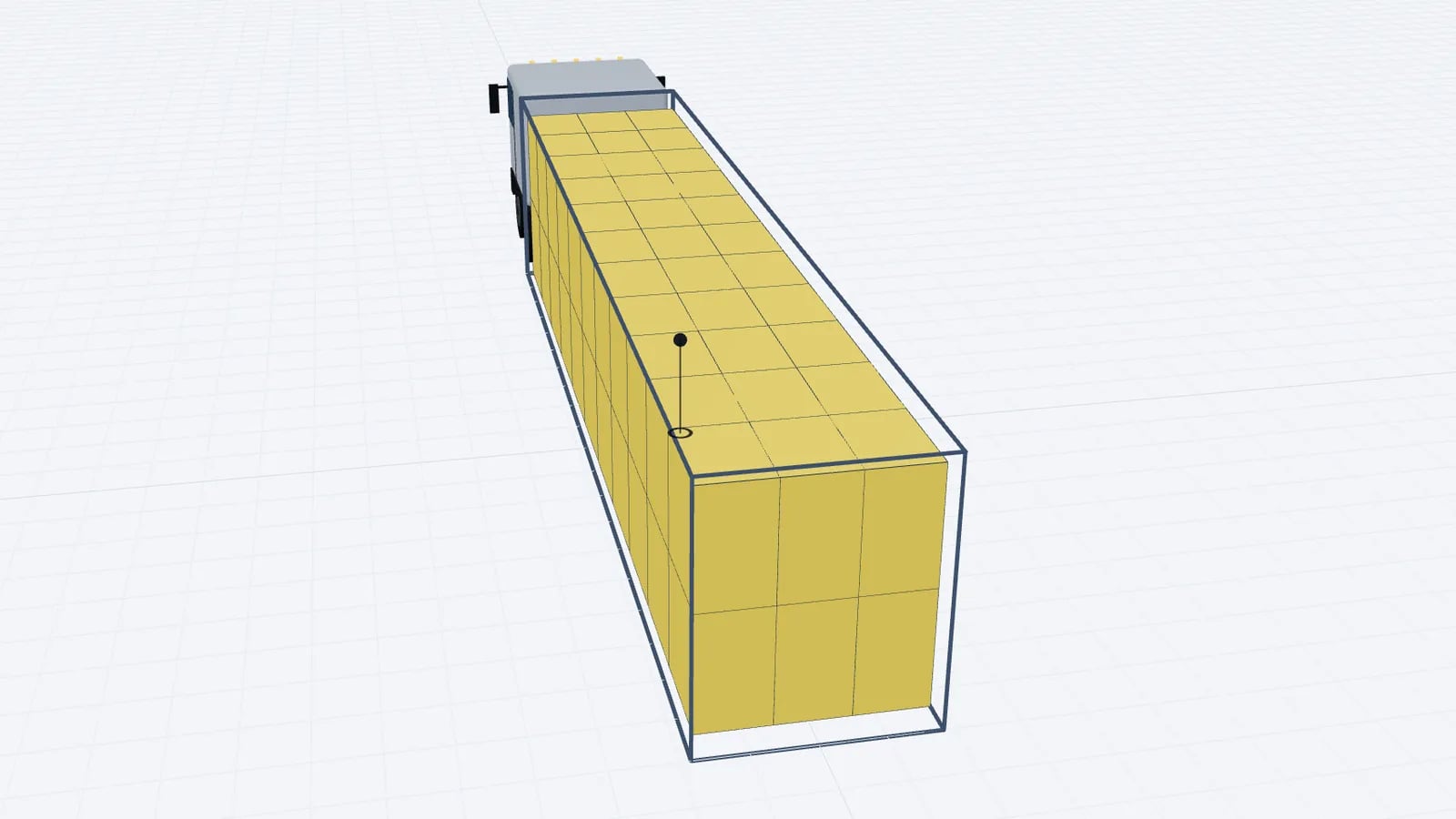
Road freight · · 5 min read
Double Stacking Pallets in Trailers: Height, Weight, Stability
When you can double stack pallets in a trailer: maximum pallet heights in standard and mega trailers, weight on the bottom pallet, payload and stability.
Read article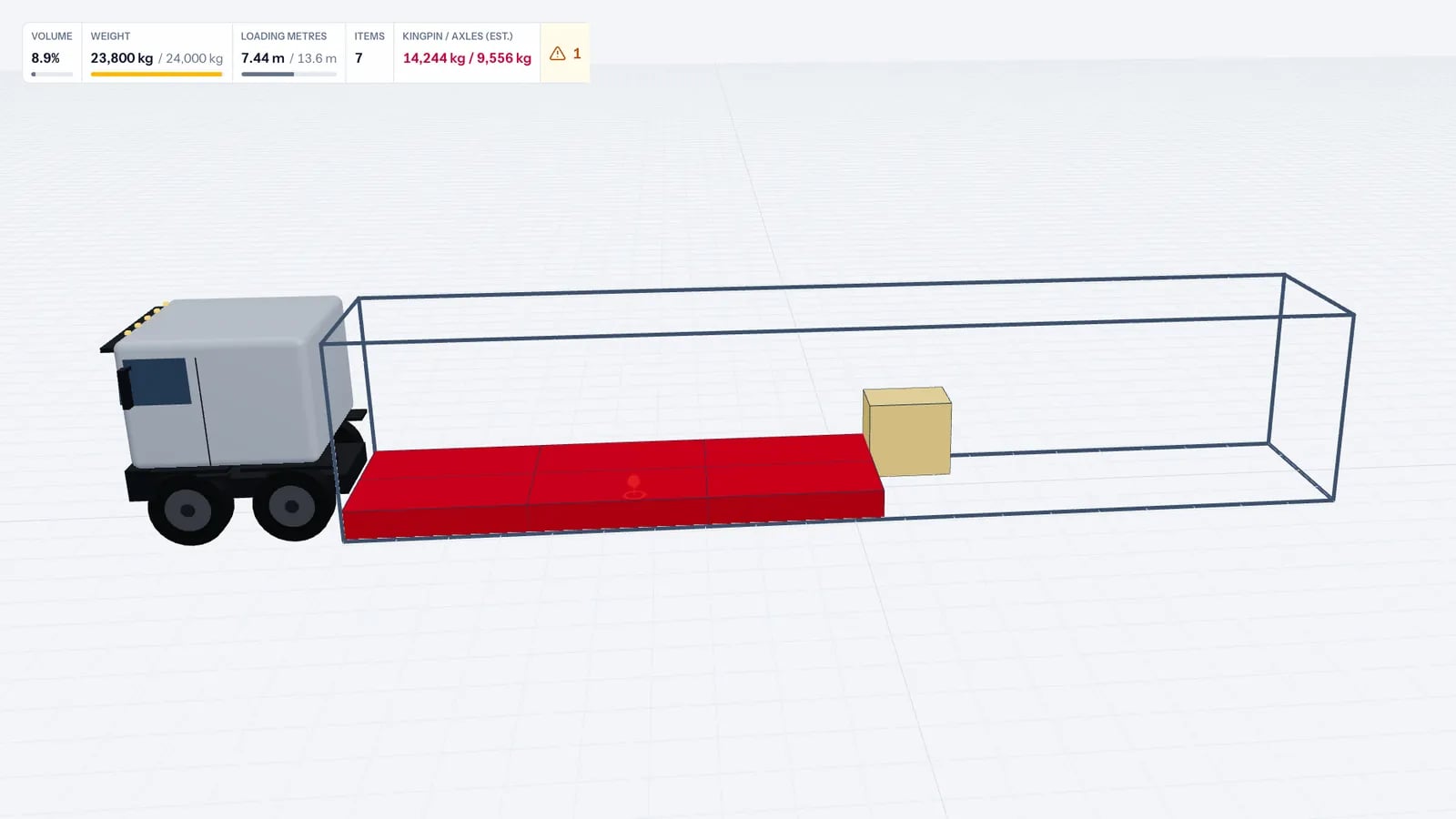
Road freight · · 5 min read
Overloaded Truck Fines: Checks to Make Before Dispatch
Avoid overloaded truck fines with a pre-dispatch routine: real cargo weights, payload margin, axle-load estimates, partial-load traps and weighbridge checks.
Read article