20ft vs 40ft Container: How to Choose for Your Shipment
Choose between a 20ft and 40ft container by cargo density, payload, floor space and cost per cubic metre. Includes break-even logic and worked examples.
Sea containers · · 5 min read
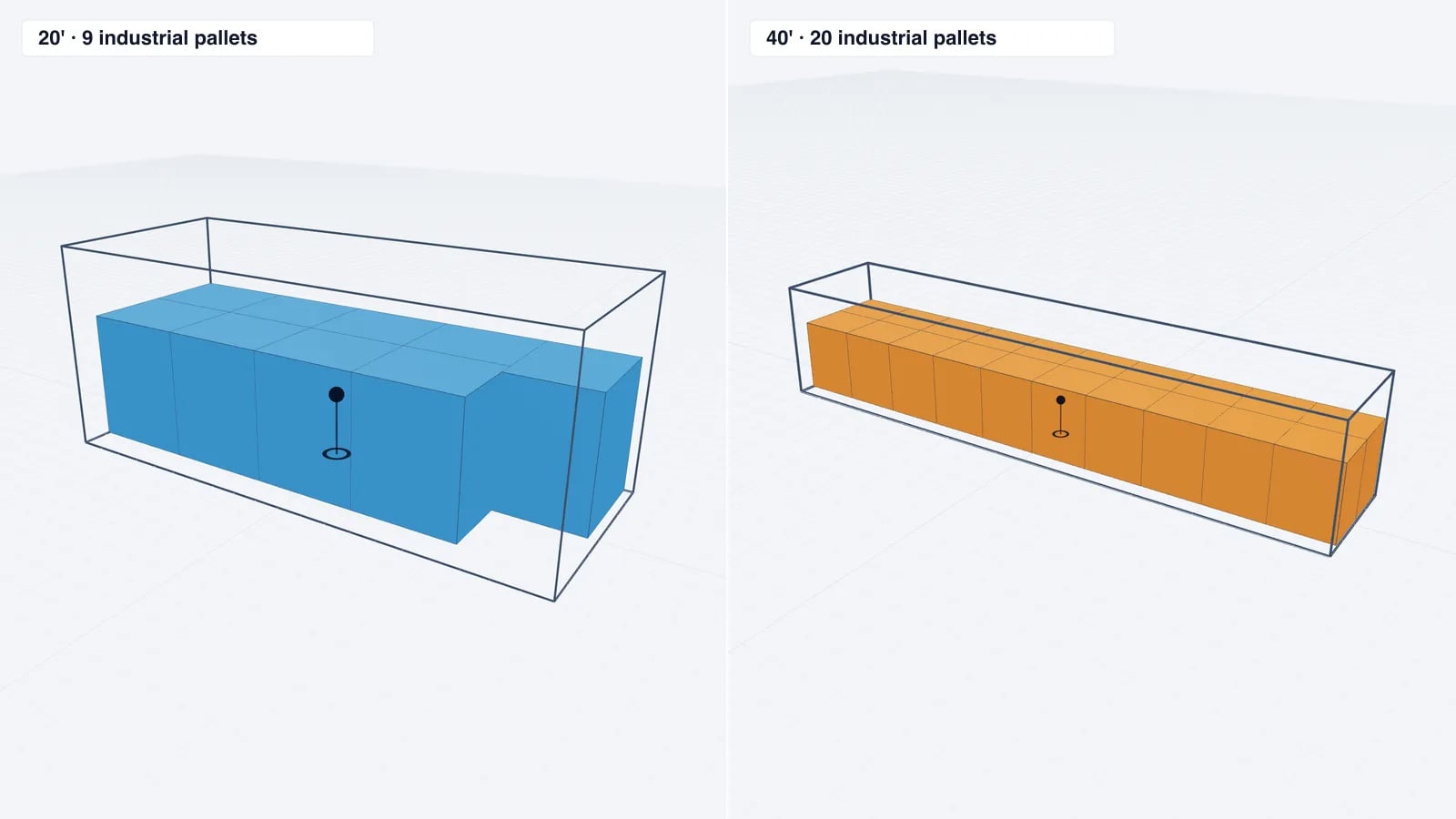
Choose a 20ft container for heavy, dense cargo and a 40ft (usually a high cube) for light, bulky cargo. A 40' has about twice the volume of a 20' but a similar maximum gross weight, so its payload is no higher and often lower. The deciding number is your cargo's density in kg per cubic metre.
Freight rates change constantly and differ by lane and carrier, so this article gives you the method rather than prices. Plug in your own quotes to decide.
The two boxes side by side
Inside length
- 20' standard
- 5.90 m
- 40' standard
- 12.03 m
- 40' high cube
- 12.03 m
Inside height
- 20' standard
- 2.39 m
- 40' standard
- 2.39 m
- 40' high cube
- 2.70 m
Capacity
- 20' standard
- 33.2 m³
- 40' standard
- 67.7 m³
- 40' high cube
- 76.3 m³
Typical payload
- 20' standard
- about 28,000 kg
- 40' standard
- about 26,700 kg
- 40' high cube
- about 26,500 kg
Euro pallets, one tier
- 20' standard
- 11
- 40' standard
- 24–25
- 40' high cube
- 24–25
Break-even density (payload / capacity)
- 20' standard
- about 840 kg/m³
- 40' standard
- about 395 kg/m³
- 40' high cube
- about 345 kg/m³
| 20' standard | 40' standard | 40' high cube | |
|---|---|---|---|
| Inside length | 5.90 m | 12.03 m | 12.03 m |
| Inside height | 2.39 m | 2.39 m | 2.70 m |
| Capacity | 33.2 m³ | 67.7 m³ | 76.3 m³ |
| Typical payload | about 28,000 kg | about 26,700 kg | about 26,500 kg |
| Euro pallets, one tier | 11 | 24–25 | 24–25 |
| Break-even density (payload / capacity) | about 840 kg/m³ | about 395 kg/m³ | about 345 kg/m³ |
Payloads vary by box: many newer 40' units are rated at 32,500 kg gross, which lifts their payload by around 2,000 kg. Use the CSC plate of the actual container when you are close to the limit. Fuller dimensions are in shipping container dimensions.
Step 1: work out your cargo density
Divide total gross weight by total volume, including pallets and packaging. If you need help with the volume, see CBM calculation.
- Above about 840 kg/m³: even a 20' runs out of weight before space. You cannot fill it; choose a 20' and accept the empty volume. Typical examples are steel, tiles, stone and bagged cement.
- Between about 400 and 840 kg/m³: a 20' can be filled by volume, and a 40' would hit its weight limit with space left. Usually one or more 20' boxes is the efficient choice.
- Below about 400 kg/m³: a 40' fills by volume before weight. Below about 345 kg/m³ the extra height of a high cube is usable too, if the cargo can be stacked.
Good to know
Volume utilisation in practice is always below 100%, because cargo does not fill the box perfectly. Use the volume you can realistically load, not the nominal capacity, when you compare. See container utilization.
Step 2: check floor space and height, not just volume
Non-stackable pallets and crates only use the floor, so the comparison is floor positions, not cubic metres. A 20' takes 11 Euro pallets in one tier; a 40' takes 24. If your goods cannot be stacked, cubic capacity is irrelevant and the high cube gains nothing. The pallet arithmetic is in how many pallets fit in a container.
Step 3: compare cost per usable unit
Once you know how much of your cargo each box can actually take, compare the cost per pallet, per cubic metre or per tonne actually shipped:
- Cost per usable m³ = total door-to-door cost of the container ÷ cubic metres you can load in it.
- Cost per tonne = total cost ÷ tonnes you can load (for weight-limited cargo).
- Cost per pallet = total cost ÷ pallets that fit.
Include all costs that change with box size: ocean freight, terminal handling, haulage at both ends, and any overweight or special chassis surcharges. On many lanes a 40' costs noticeably less than two 20' boxes, which is why the 40' usually wins on cost per cubic metre for light cargo. For dense cargo the 40' can carry no more weight than a 20', so you pay for empty space.
Worked examples
Shipment (hypothetical): Ceramic tiles on 18 industrial pallets
- Weight / volume
- 25,200 kg / 18.4 m³
- Density
- about 1,370 kg/m³
- Better choice
- One 20' (weight-limited)
Shipment (hypothetical): Garden furniture in cartons
- Weight / volume
- 7,500 kg / 62 m³
- Density
- about 120 kg/m³
- Better choice
- One 40' HC (volume-limited)
Shipment (hypothetical): Canned food on 22 Euro pallets
- Weight / volume
- 19,800 kg / 31.7 m³
- Density
- about 625 kg/m³
- Better choice
- Volume alone suggests a 20', but floor positions don't fit: see below
| Shipment (hypothetical) | Weight / volume | Density | Better choice |
|---|---|---|---|
| Ceramic tiles on 18 industrial pallets | 25,200 kg / 18.4 m³ | about 1,370 kg/m³ | One 20' (weight-limited) |
| Garden furniture in cartons | 7,500 kg / 62 m³ | about 120 kg/m³ | One 40' HC (volume-limited) |
| Canned food on 22 Euro pallets | 19,800 kg / 31.7 m³ | about 625 kg/m³ | Volume alone suggests a 20', but floor positions don't fit: see below |
The canned food case shows why you need all three checks. The volume is 22 pallets × 1.2 × 0.8 × 1.5 m = 31.7 m³ and the weight 22 × 900 kg = 19,800 kg, which looks like a 20'. But a 20' has only 11 floor positions, and 1.5 m pallets cannot be double-stacked under its 2.28 m door. You need either two 20' boxes (11 each) or one 40' (24 positions, 19,800 kg under the payload). Compare the two quotes; the 40' is often cheaper, and it is one box to handle.
The furniture case checks out the other way: 62 m³ is more than a 40' standard can realistically hold at good utilisation, so the high cube's extra 8.6 m³ is what makes it fit in one box.
Other things that tip the decision
- Road weight limits at origin and destination. A heavy 20' on a chassis can exceed national gross vehicle limits even when the container is within its rating; check before you plan to full payload.
- Equipment availability. Some ports and inland depots have more of one size; a scarce box can mean delays or surcharges.
- Receiver's dock. Some warehouses handle 20' boxes more easily, or have limits on vehicle length.
- Splitting risk. Two 20' boxes can be split across sailings; a single 40' arrives as one.
- 45' high cube boxes add 1.5 m of length and fit 27 Euro pallets, but are not accepted on every lane or road network.
The fastest way to settle a borderline case is to plan it in both boxes. In EveryLoading you can paste the packing list once, switch the vehicle between the 20' and 40' presets in the vehicle tab, and compare what fits, the weight against payload and what is left over.
Frequently asked questions
Can a 40ft container carry more weight than a 20ft?
Usually not. Both are commonly rated at similar maximum gross weights, and the 40ft box is heavier when empty, so its payload is the same or lower.
When is a 20ft container cheaper than a 40ft?
When the cargo is dense enough to reach the weight limit of a 20ft box. A 40ft could not carry more weight, so you would pay for space you cannot use.
Is a 40ft high cube always better than a standard 40ft?
Only if you can use the extra 30 cm of height, for example by stacking cartons higher or double-stacking pallets under the door height. For non-stackable floor cargo the two are equivalent.
What density makes a 20ft or 40ft container weight-limited?
Roughly 840 kg/m³ for a 20ft and 395 kg/m³ for a 40ft, using typical payloads. Above that density the box reaches its weight limit before it is full.
Keep reading
Sea containers · · 5 min read
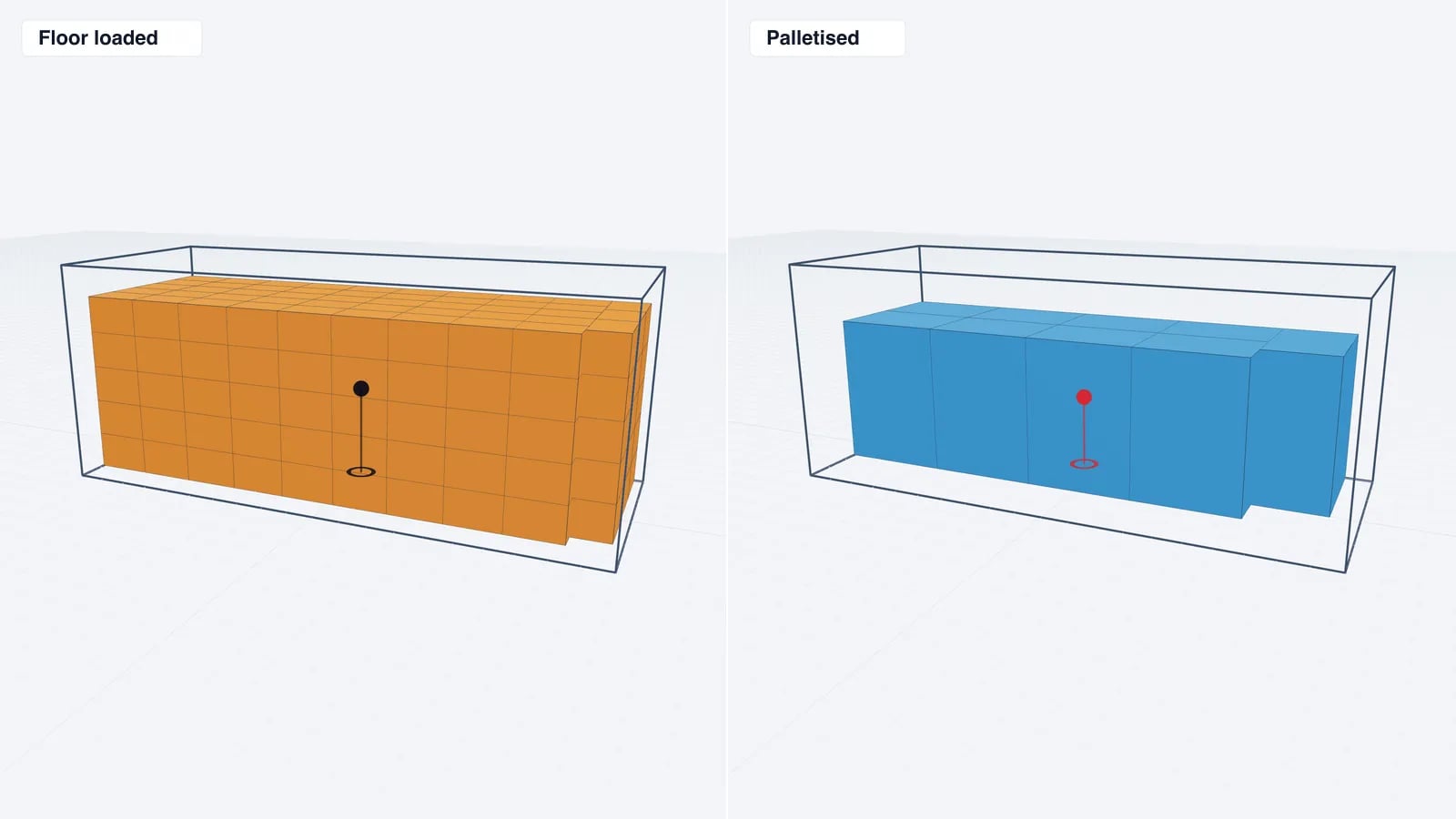
Floor Loading Cartons in a Container vs Palletised Loads
When to floor load cartons instead of palletising, how to orient and stack them, how to check carton strength, and a worked 40ft high cube comparison.
Read article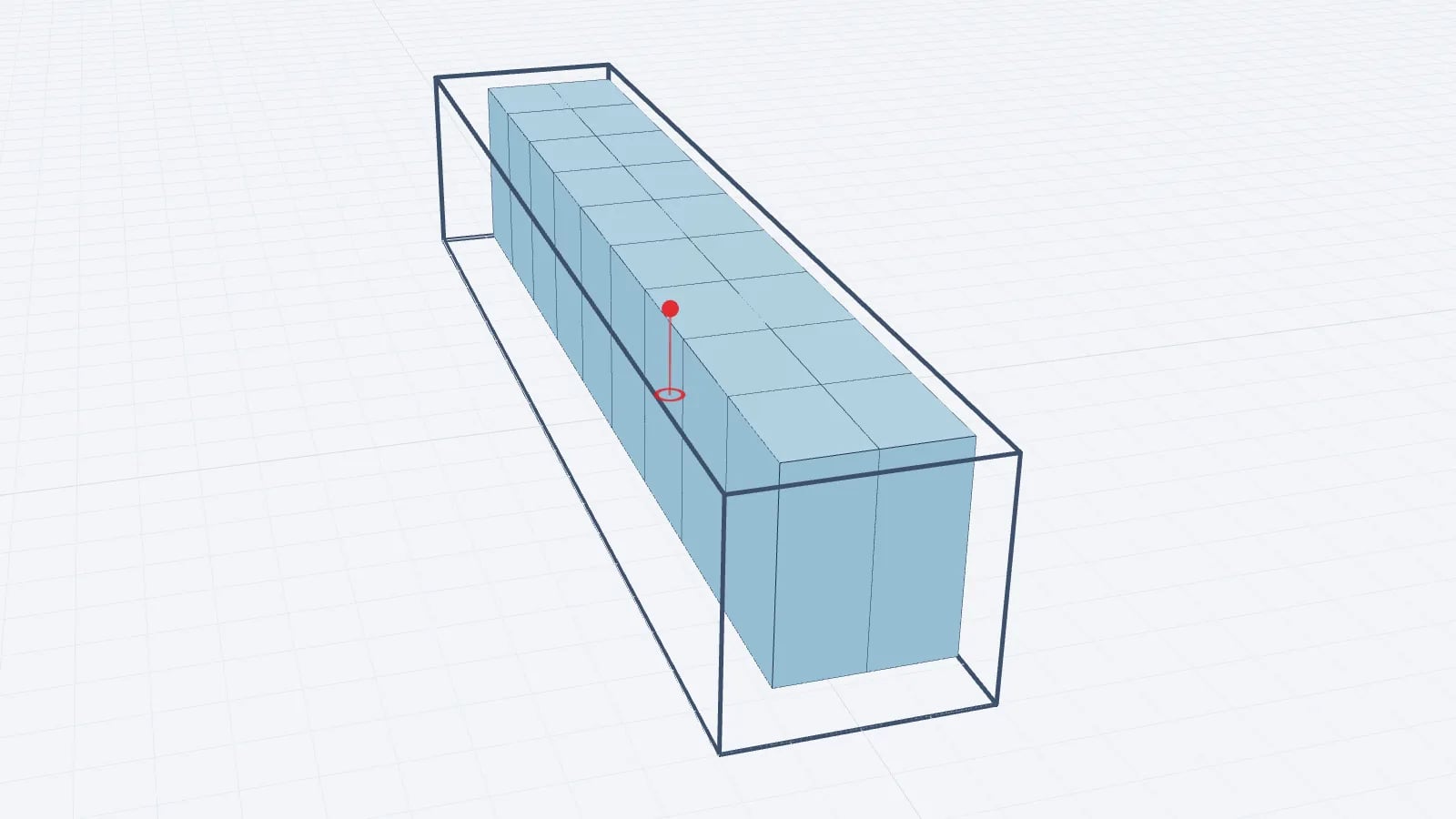
Sea containers · · 5 min read
Reefer Container Loading: Airflow, Red Line and Pallet Plans
How reefers move air, why the T-floor and red load line limit your plan, chilled vs frozen stowage, pre-cooling, and a worked 40ft reefer pallet plan.
Read article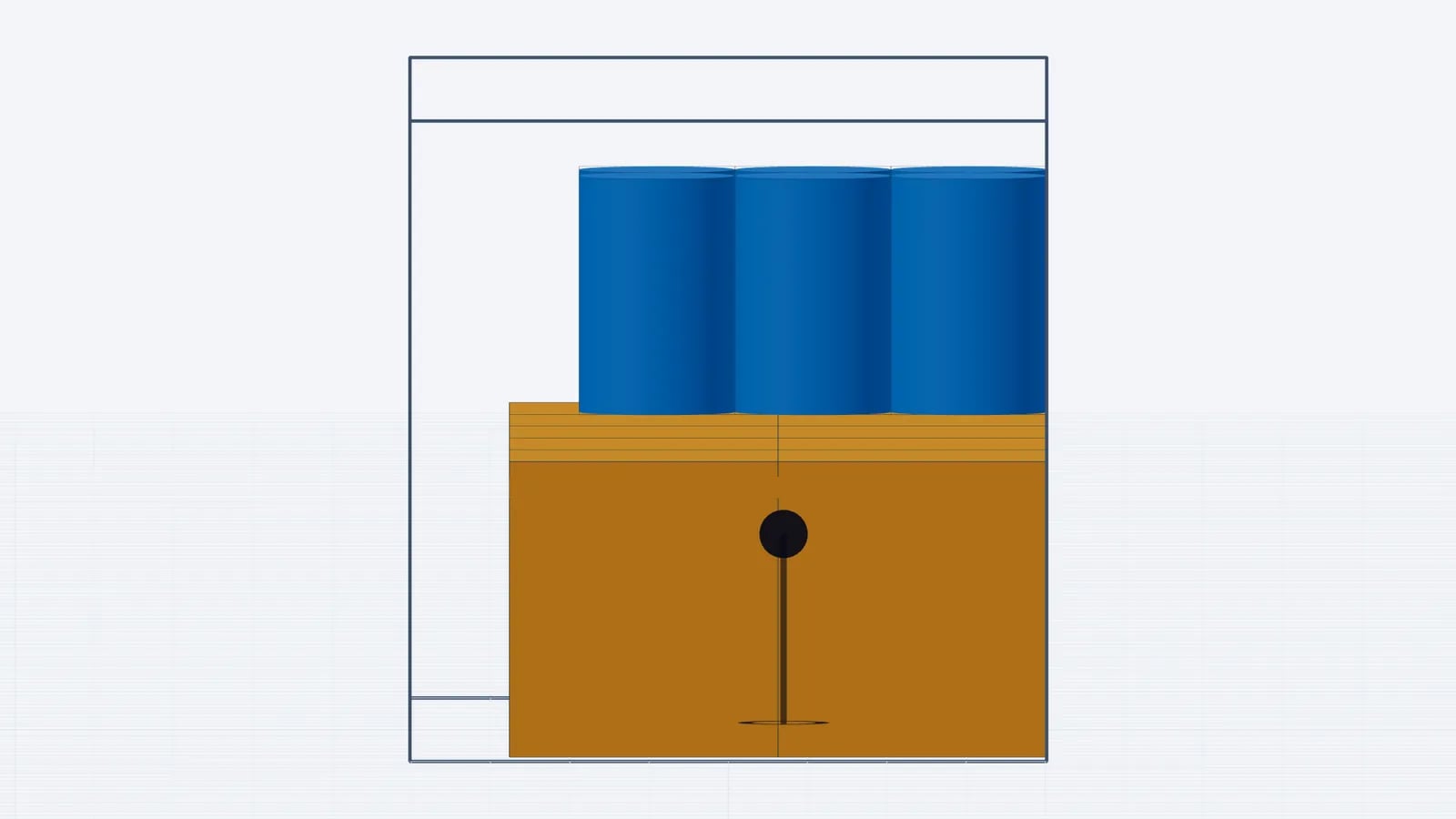
Sea containers · · 6 min read
Container Dunnage: Airbags, Blocking, Bracing and Void Fill
How to secure container cargo with airbags, timber blocking, bracing, lashing and void fill, and how to plan the load so there are fewer gaps to fill.
Read article