Container Dunnage: Airbags, Blocking, Bracing and Void Fill
How to secure container cargo with airbags, timber blocking, bracing, lashing and void fill, and how to plan the load so there are fewer gaps to fill.
Sea containers · · 6 min read
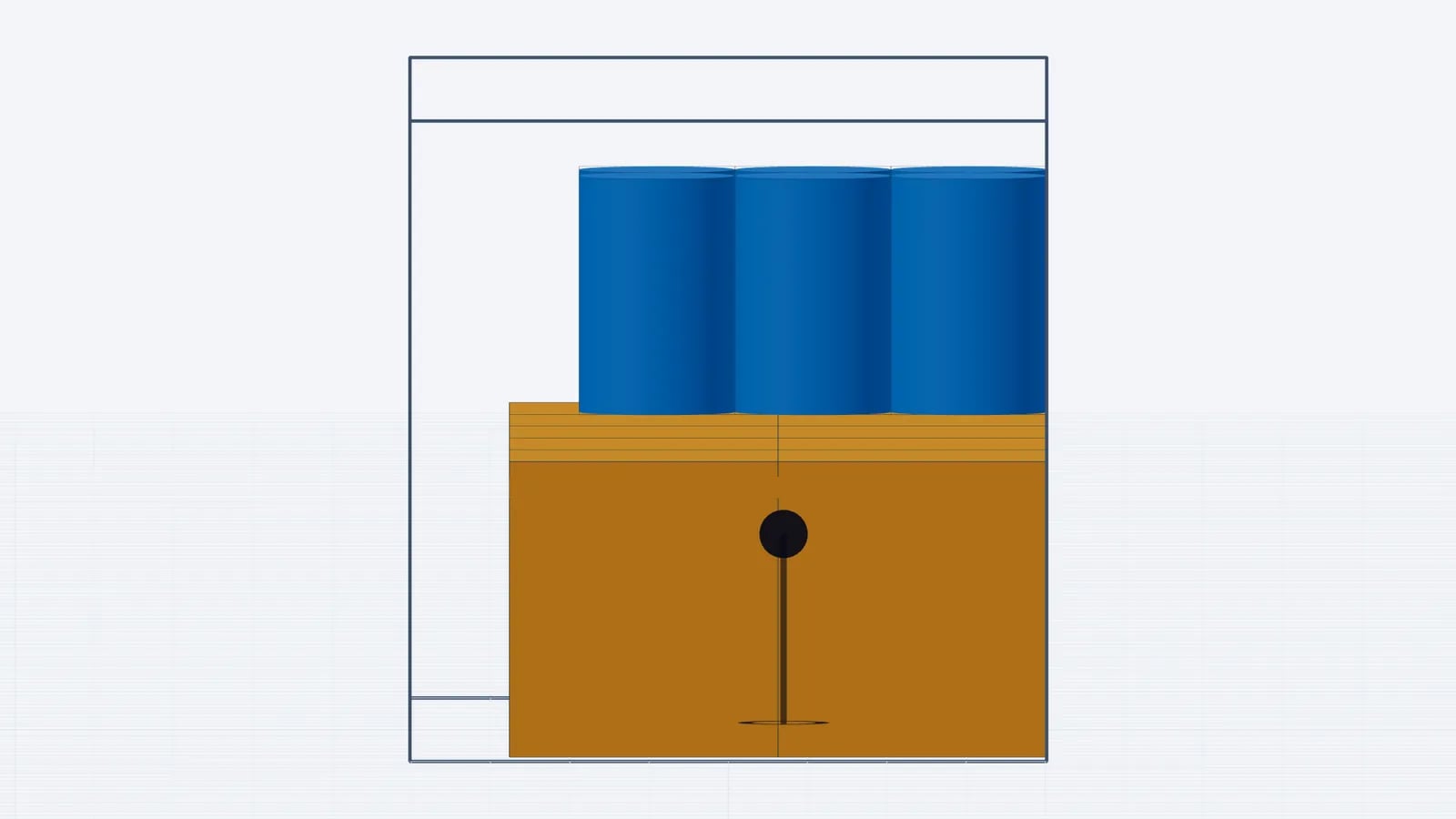
Dunnage is any material used to fill gaps and hold cargo in place inside a container: inflatable airbags, timber blocking and bracing, cardboard or foam void fill, and the lashings that tie cargo to the container's lashing points. The aim is simple: the cargo must not be able to move forwards, backwards, sideways or upwards. The best way to need less dunnage is to plan the load so the gaps are few, small and in places you can fill.
The reference for good practice is the CTU Code (the IMO/ILO/UNECE Code of Practice for Packing of Cargo Transport Units). This article is general guidance, not a securing calculation; for heavy or unusual cargo, use a securing specialist.
Why containers need securing
At sea a container rolls, pitches and heaves; on the road it brakes and corners; at the terminal it is lifted and set down. Cargo with room to move builds up speed over even a few centimetres and hits the walls or the doors. Typical consequences are crushed cartons, broken pallets, punctured drums and, worst, cargo falling when the doors are opened.
The main securing methods
Method: Airbags (dunnage bags)
- What it is
- Paper or woven-polypropylene bags inflated in a void between cargo units
- Best for
- Moderate gaps between pallets or cargo blocks, side to side or between rows
Method: Blocking
- What it is
- Timber or other solid material fixed against the cargo to stop it sliding
- Best for
- Row ends, the door end, keeping heavy items off the walls
Method: Bracing
- What it is
- Timber struts from the cargo to a strong part of the container
- Best for
- Tall or heavy items that could tip, gaps too large for airbags
Method: Lashing
- What it is
- Straps, chains or wire to the lashing points in the floor rails and corner posts
- Best for
- Heavy, irregular or high items; machinery; vehicles
Method: Void fill
- What it is
- Cardboard honeycomb, foam blocks, empty pallets, carton fillers
- Best for
- Small irregular gaps, top layers of carton loads
Method: Friction mats
- What it is
- Anti-slip mats under cargo
- Best for
- Heavy items; they reduce the restraint needed from other methods
| Method | What it is | Best for |
|---|---|---|
| Airbags (dunnage bags) | Paper or woven-polypropylene bags inflated in a void between cargo units | Moderate gaps between pallets or cargo blocks, side to side or between rows |
| Blocking | Timber or other solid material fixed against the cargo to stop it sliding | Row ends, the door end, keeping heavy items off the walls |
| Bracing | Timber struts from the cargo to a strong part of the container | Tall or heavy items that could tip, gaps too large for airbags |
| Lashing | Straps, chains or wire to the lashing points in the floor rails and corner posts | Heavy, irregular or high items; machinery; vehicles |
| Void fill | Cardboard honeycomb, foam blocks, empty pallets, carton fillers | Small irregular gaps, top layers of carton loads |
| Friction mats | Anti-slip mats under cargo | Heavy items; they reduce the restraint needed from other methods |
Using airbags correctly
- Size the bag to the void. Each airbag size is rated for a maximum gap width, set by the manufacturer. Wider voids should be reduced first with timber or a different layout.
- Never against the doors. An airbag must sit between cargo units, not between cargo and the doors, which are not a restraint.
- Smooth, flat faces. Bags placed against sharp edges, pallet corners or uneven surfaces can burst; protect them with cardboard or boards.
- Inflate to the specified pressure. Over-inflation can damage cartons; under-inflation lets the cargo move.
- Cover the load face. The bag should bear on the strong part of the cargo, usually low on pallets, not on a single fragile carton.
Blocking, bracing and lashing points
Blocking timber should bear on the cargo over a wide area and be fixed so it cannot fall out of place. At the door end, a timber gate or bulkhead across the width, held against the corner posts or by braces to the floor, keeps the last row off the doors.
Lashing points in the floor rails and on the corner posts have a rated capacity that is lower than many people expect, and it varies by container. Check the markings or the operator's data before relying on them, use several points rather than one, and don't lash to the side wall panels, which are not designed for it.
Good to know
Wooden dunnage in international trade is covered by the plant-health standard ISPM 15 in many countries. Use heat-treated or fumigated timber with the ISPM 15 mark, or a non-wood alternative, and check the destination's rules.
Planning to minimise voids
Dunnage costs money and loading time, and every void is a place where something can go wrong. The plan decides how many voids there are and where they end up.
- 1Choose a layout that leaves one predictable gap. In a container about 2.35 m wide, two lanes of different pallet orientation (1,200 + 800 mm) leave about 350 mm; two lanes of Euro pallets on their narrow side leave about 750 mm. The first is far easier to secure. See how many pallets fit in a container.
- 2Put the gap where you can fill it. A single gap down the middle can take one line of airbags; two small gaps at the walls are harder to fill evenly.
- 3Keep rows square. Ragged rows create many small voids instead of one manageable one.
- 4Fill gaps with cargo first. Small cartons from the same shipment are better void fill than airbags.
- 5Plan the door end. Know in advance whether the last row ends flush across the width, and what blocks it.
- 6Keep heavy items blocked to the floor. Heavy items standing alone need blocking on all sides or lashing; place them against other cargo where possible.
Worked example: securing pallets in a 40'
Say you are loading 22 Euro pallets, 1.4 m high, into a 40' container with typical inside dimensions of 12.03 × 2.35 m.
- 1Layout: lane A with pallets crosswise (800 mm along the length) and lane B lengthwise (1,200 mm along). 13 pallets in lane A use 10.4 m; 9 in lane B use 10.8 m. Both lanes stop more than a metre short of the doors.
- 2Side gap: 2,350 − (1,200 + 800) = about 350 mm. Push lane A against one wall and lane B against the other, leaving the gap in the centre. One line of airbags sized for a 350 mm void, placed so every pallet bears on a bag, stops sideways movement.
- 3Door-end gap: 12.03 − 10.8 = about 1.2 m behind lane B and 1.6 m behind lane A. That is too large for airbags. Build a timber bulkhead across the width against the last pallets and brace it to the floor or corner posts, with a step or separate blocking for each lane so both rows are held.
- 4Front wall: both lanes start tight against the front wall, so no blocking is needed there.
The same 22 pallets in two straight lanes of Euro pallets on their narrow side would leave a 750 mm centre gap, needing much more dunnage. Planning the layout first is what keeps securing simple.
A 3D plan makes the gaps visible before loading. In EveryLoading, the top and rear views of a container plan show where the empty space is, and you can drag items to move gaps to where they can be filled. The PDF plan gives the loading crew the layout, so the dunnage can be prepared in advance. For weight distribution and the overall stuffing method, see container stuffing plan; for the road-side principles behind restraint, see load securing basics.
Frequently asked questions
What is dunnage in a container?
Material used to fill empty space and hold cargo in place: airbags, timber blocking and bracing, cardboard or foam void fill, and lashings.
Can I put an airbag against the container doors?
No. The doors are not a restraint, and a bag against them can push the doors or fall with the cargo when they open. Block the last row with timber instead.
How big a gap can a dunnage bag fill?
Each bag size has a maximum void width set by its manufacturer. Larger gaps should first be reduced with timber or a better layout.
Does wooden dunnage need ISPM 15 treatment?
In many countries yes: wood dunnage in international shipments must be heat-treated or fumigated and marked. Check the destination country's requirements.
Keep reading
Sea containers · · 5 min read
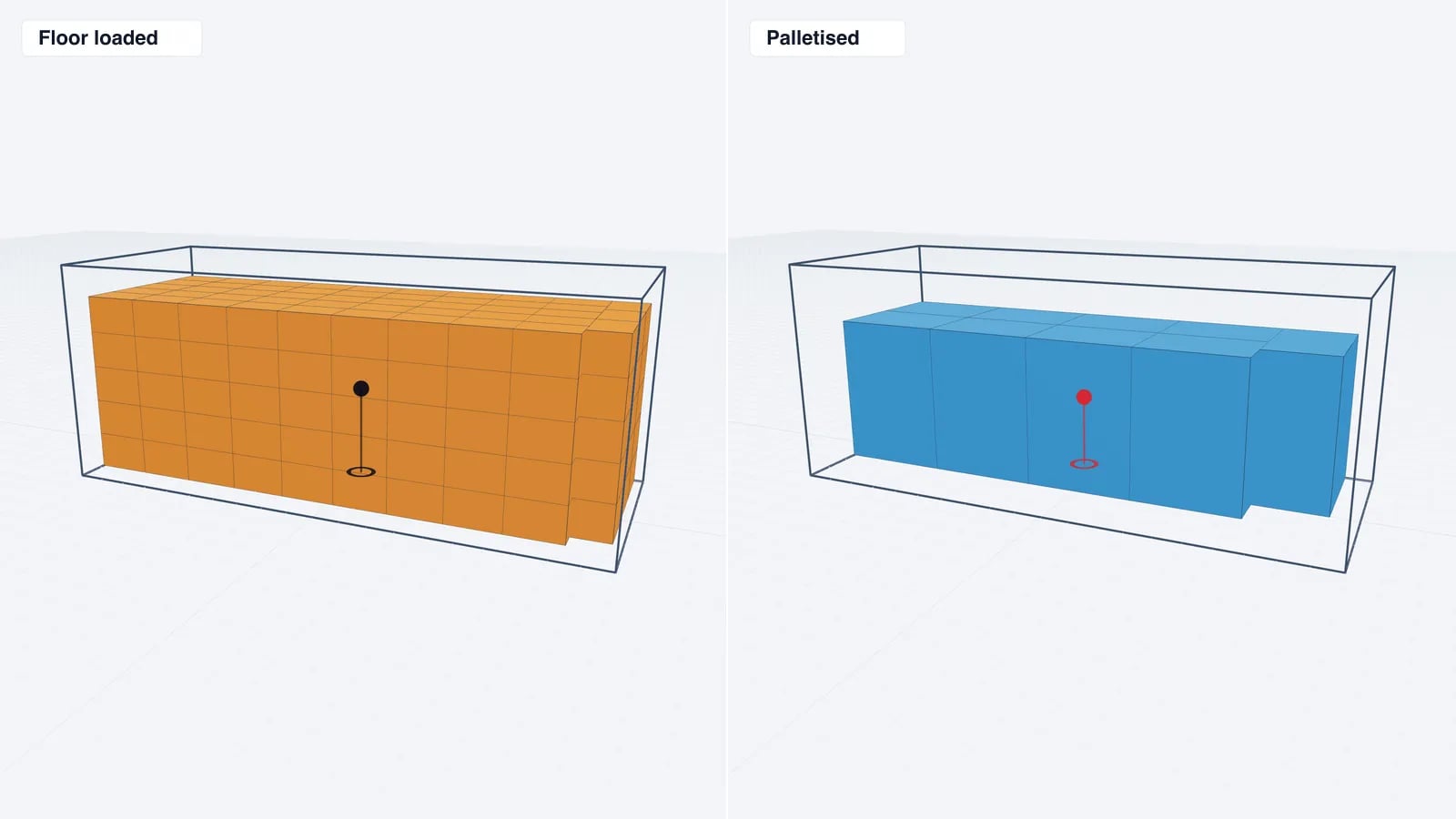
Floor Loading Cartons in a Container vs Palletised Loads
When to floor load cartons instead of palletising, how to orient and stack them, how to check carton strength, and a worked 40ft high cube comparison.
Read article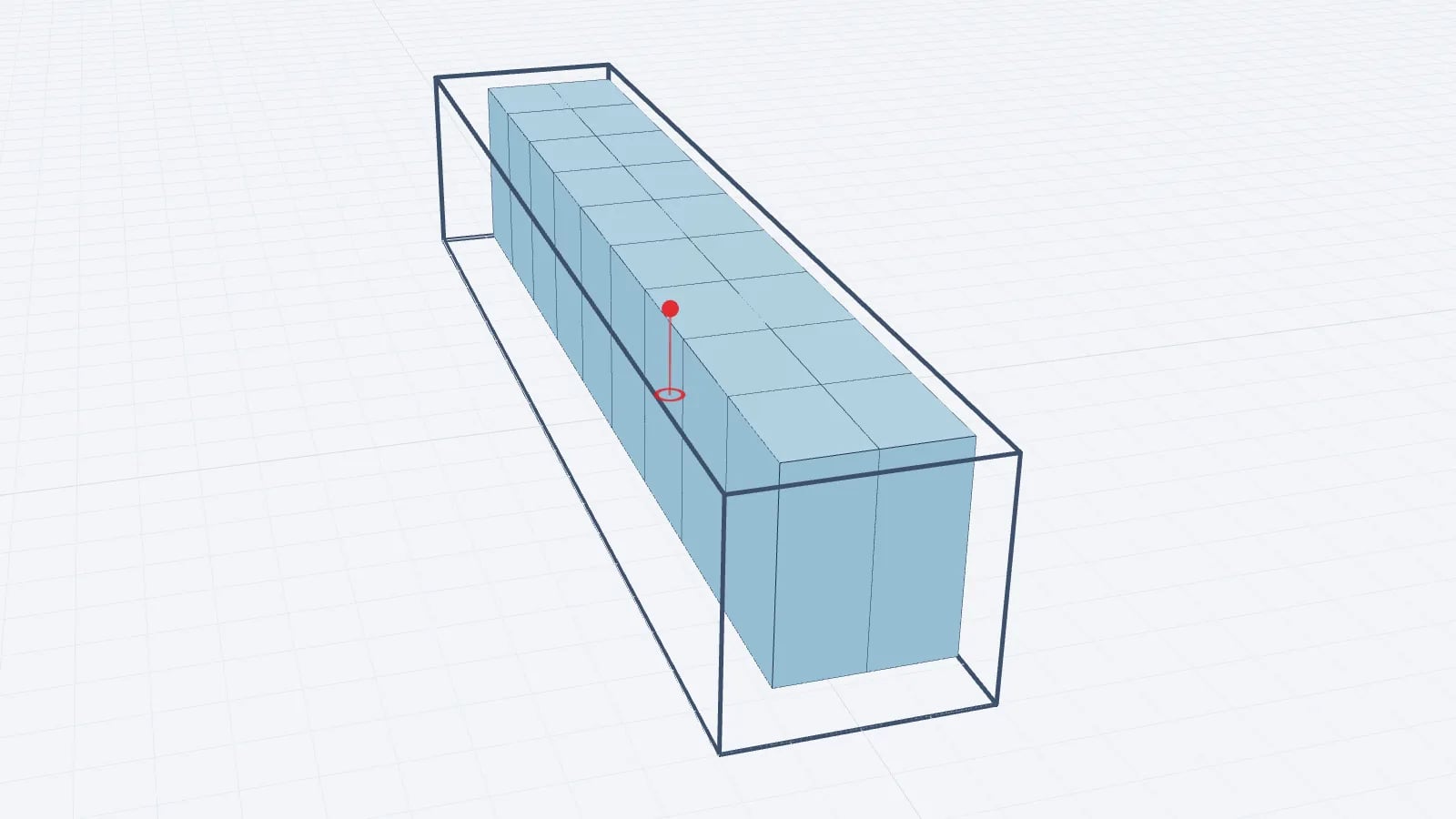
Sea containers · · 5 min read
Reefer Container Loading: Airflow, Red Line and Pallet Plans
How reefers move air, why the T-floor and red load line limit your plan, chilled vs frozen stowage, pre-cooling, and a worked 40ft reefer pallet plan.
Read article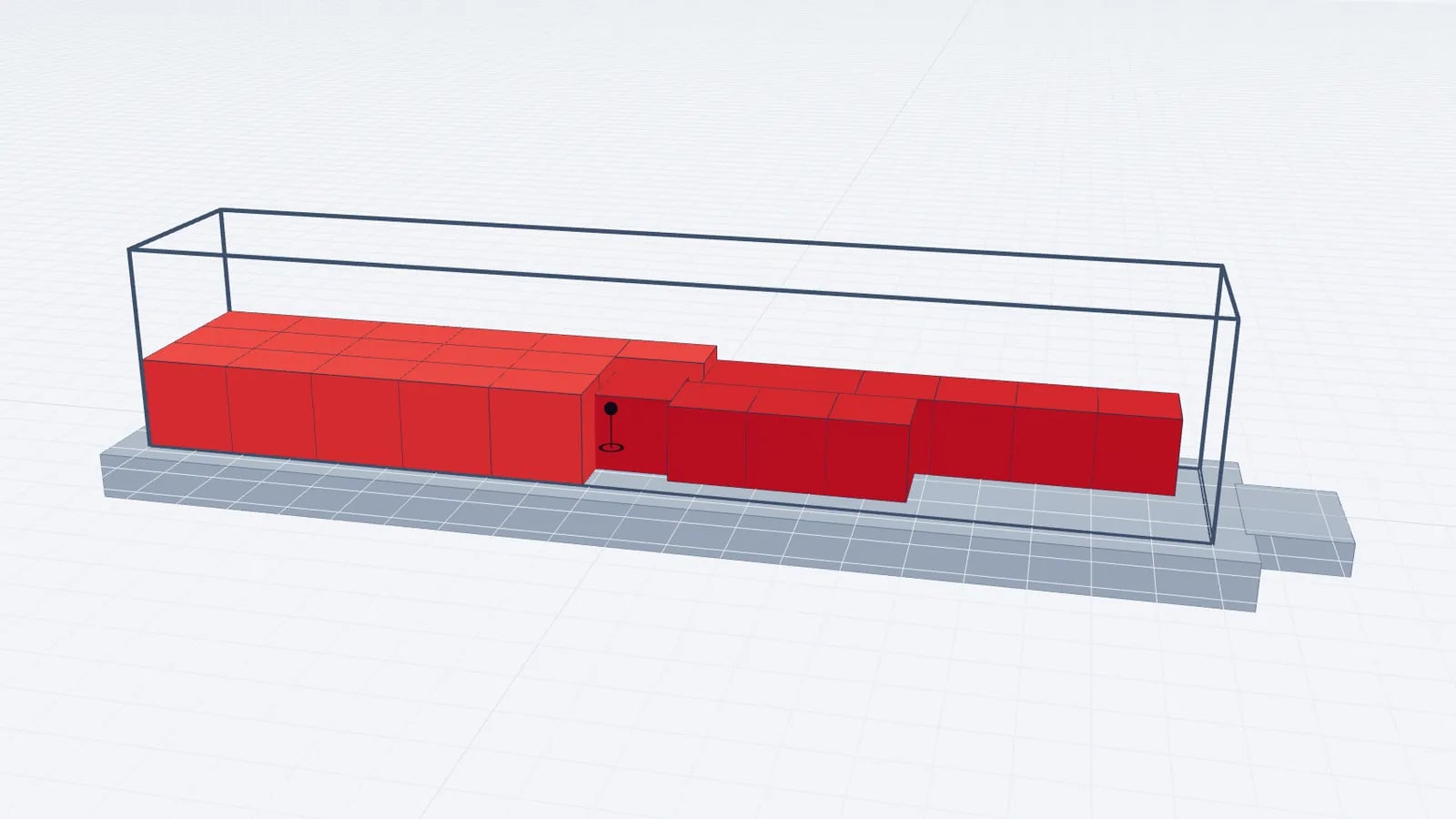
Sea containers · · 6 min read
Shipping Container Dimensions: 20', 40', 40' HC and 45' HC
Internal size, door openings, tare, payload and cubic capacity of 20', 40', 40' high cube and 45' containers, with the limits that matter when you plan a load.
Read article