How Many Pallets Fit in a 40ft Container (and a 20ft)?
Euro and industrial pallet counts for 20', 40', 40' HC, 45' and reefer containers, the mixed-lane layout that gets the most in, and when to double-stack.
Sea containers · · 6 min read
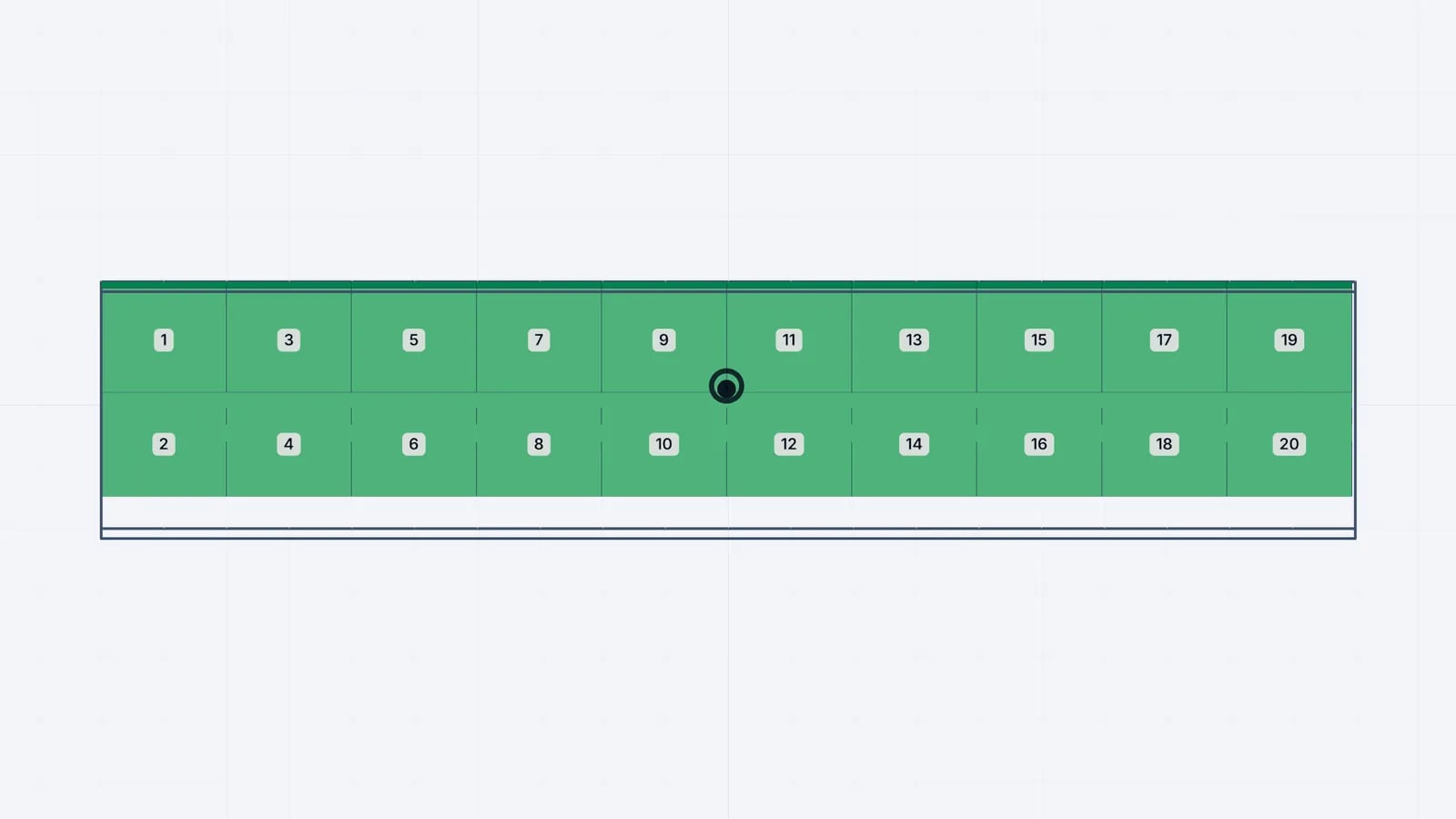
A 40ft container takes 24 to 25 Euro pallets (1200 × 800 mm) or 20 to 21 industrial pallets (1200 × 1000 mm) in one tier. A 20ft takes 11 Euro pallets or 9 industrial pallets. A 40ft high cube has the same floor, so the same count per tier, but its extra 30 cm of height often allows a second tier.
The reason the numbers look odd is the internal width of about 2.35 m. It is too narrow for two pallets side by side on their 1.2 m edge, so the best layouts mix pallet orientations across the width.
Pallet counts by container type
Container (typical inside L × W): 20' (5.90 × 2.35 m)
- Euro 1200×800, one tier
- 11
- Industrial 1200×1000, one tier
- 9
Container (typical inside L × W): 40' and 40' HC (12.03 × 2.35 m)
- Euro 1200×800, one tier
- 24 (25 if pallets are exact)
- Industrial 1200×1000, one tier
- 20 (21–22 if pallets are exact)
Container (typical inside L × W): 45' HC (13.56 × 2.35 m)
- Euro 1200×800, one tier
- 27
- Industrial 1200×1000, one tier
- 24
Container (typical inside L × W): 45' pallet-wide (13.56 × about 2.44 m)
- Euro 1200×800, one tier
- 33
- Industrial 1200×1000, one tier
- 26
Container (typical inside L × W): 40' HC reefer (about 11.58 × 2.29 m)
- Euro 1200×800, one tier
- 23
- Industrial 1200×1000, one tier
- 20
| Container (typical inside L × W) | Euro 1200×800, one tier | Industrial 1200×1000, one tier |
|---|---|---|
| 20' (5.90 × 2.35 m) | 11 | 9 |
| 40' and 40' HC (12.03 × 2.35 m) | 24 (25 if pallets are exact) | 20 (21–22 if pallets are exact) |
| 45' HC (13.56 × 2.35 m) | 27 | 24 |
| 45' pallet-wide (13.56 × about 2.44 m) | 33 | 26 |
| 40' HC reefer (about 11.58 × 2.29 m) | 23 | 20 |
Good to know
These are floor positions calculated from typical internal dimensions. Real boxes vary by a few centimetres, and pallets with overhanging cartons or damaged boards take more room. Treat the higher figures as possible, not guaranteed.
The mixed-lane trick
With two lanes of Euro pallets placed narrow side across (800 + 800 = 1,600 mm), you waste about 750 mm of width along the whole container. The better layout uses two lanes of different orientation:
- Lane A: pallets turned so the 1200 mm side runs across the container and the 800 mm side runs along it.
- Lane B: pallets with the 800 mm side across and the 1200 mm side along.
- Together the lanes use 1,200 + 800 = 2,000 mm of the 2,350 mm width, leaving about 350 mm, which is usually split between the walls or filled with dunnage.
In a 20' (5,898 mm long), lane A takes 7 pallets (7 × 800 = 5,600 mm) and lane B takes 4 (4 × 1,200 = 4,800 mm): 11 Euro pallets. In a 40' (12,032 mm long), lane A takes 15 (12,000 mm) and lane B takes 10 (12,000 mm): 25, but with only 32 mm to spare. That is why most planners count 24 and treat the 25th as a bonus if the pallets are clean and square.
Industrial pallets work the same way: one lane with the 1200 mm side across (1000 mm along) and one with the 1000 mm side across (1200 mm along), using 2,200 mm of width. A 20' gives 5 + 4 = 9; a 40' gives 12 + 10 = 22 in theory, again with 32 mm left. The simple two-lane layout (1000 + 1000 across) gives 2 × 10 = 20 in a 40' and leaves 350 mm for loading tolerance, which is why 20 is the safe planning figure.
Tip
You will sometimes see "10 industrial pallets in a 20'" quoted. With typical internal dimensions the straight-lane arithmetic gives 9; 10 only works with slightly smaller pallets or a bigger box. Check with a plan before you promise a customer.
Double-stacking: when the high cube pays off
The floor count is the same in a 40' and a 40' high cube. The high cube earns its place only if you can stack. What limits the stack is not the 2.70 m ceiling but the door opening of about 2.58 m (2.28 m on a standard box), because a forklift usually drives pallets in one at a time or as a pair.
Container: 20' / 40' standard
- Door height (typical)
- 2.28 m
- Max height per pallet for two equal tiers (with margin)
- about 1.10 m
Container: 40' / 45' high cube
- Door height (typical)
- 2.58 m
- Max height per pallet for two equal tiers (with margin)
- about 1.25 m
| Container | Door height (typical) | Max height per pallet for two equal tiers (with margin) |
|---|---|---|
| 20' / 40' standard | 2.28 m | about 1.10 m |
| 40' / 45' high cube | 2.58 m | about 1.25 m |
Weight on the bottom pallet is the other limit. Check that the bottom load is rated to carry the top one; general pallet stacking rules are covered in pallet stacking rules.
Worked example 1: light pallets, standard or high cube?
Say you have 40 Euro pallets of household goods, each 1.15 m high and 380 kg, safe to stack two high.
- 1Floor positions needed if double-stacked: 40 / 2 = 20. A 40' has 24, so floor space is fine.
- 2Stack height: 2 × 1.15 = 2.30 m. That is above the 2.28 m door of a standard 40', so it will not go in as a pair. It is comfortably below the 2.58 m door of a 40' high cube.
- 3Weight: 40 × 380 = 15,200 kg, well under the typical 26,500 kg payload of a 40' HC.
- 4Result: one 40' high cube, double-stacked, with 4 floor positions free. A standard 40' single-stacked would only take 24 of the 40 pallets.
Worked example 2: heavy pallets, the 20ft wins
Now say you have 18 industrial pallets of ceramic tiles, each 0.85 m high and 1,400 kg, which the manufacturer allows to stack two high.
- 1Total weight: 18 × 1,400 = 25,200 kg.
- 2A 20' has 9 floor positions; stacked two high that is 18 pallets. Stack height 2 × 0.85 = 1.70 m, well under the door.
- 325,200 kg is under the typical 20' payload of about 28,000 kg, but check the CSC plate of the actual box and the road limits for the container chassis at both ends.
- 4Result: one 20' carries it. A 40' would carry the same weight with 15 empty floor positions and usually a higher rate. See 20ft vs 40ft container.
With heavy pallets like this, also spread the weight evenly along the length rather than packing everything at the front. Weight distribution inside the box is covered in container stuffing plan.
Mixing pallet sizes and cartons
- Put the larger industrial pallets in the 1,200 mm lane and fill the 800 mm lane with Euro pallets; this often gains one or two positions compared with planning each size separately.
- Use the 350 mm side gap for low cartons or long, slim items if the shipment has them, otherwise fill it with dunnage so pallets cannot slide.
- A short row of floor-loaded cartons at the door end can use the last metre a pallet row cannot. See floor loading cartons.
- US pallets (48 × 40 in, 1219 × 1016 mm) behave like slightly larger industrial pallets: with mixed lanes about 20 fit in a 40' and 9 in a 20', but two straight lanes only give 18 and 8.
Calculating mixed layouts by hand is slow and error-prone. In EveryLoading you choose a container preset, add your pallets with their real sizes and stacking rules, and the optimizer tries the rotations for you; the cargo settings guide explains how to mark items as stackable or not rotatable.
Frequently asked questions
How many Euro pallets fit in a 40ft container?
24 in one tier as a safe planning figure, using one lane of pallets turned crosswise and one lane lengthwise. 25 is possible with exact pallets and a standard box, but leaves only a few centimetres of slack.
How many standard pallets fit in a 20ft container?
Typically 11 Euro pallets or 9 industrial (1200 × 1000 mm) pallets on the floor, single-stacked.
Does a high cube hold more pallets?
Not on the floor; the floor area is the same as a standard 40ft. It holds more only when pallets can be double-stacked within the roughly 2.58 m door height.
How many pallets fit in a 40ft reefer?
Usually 23 Euro pallets or 20 industrial pallets, because insulated walls make a reefer narrower and shorter inside than a dry box.
Keep reading
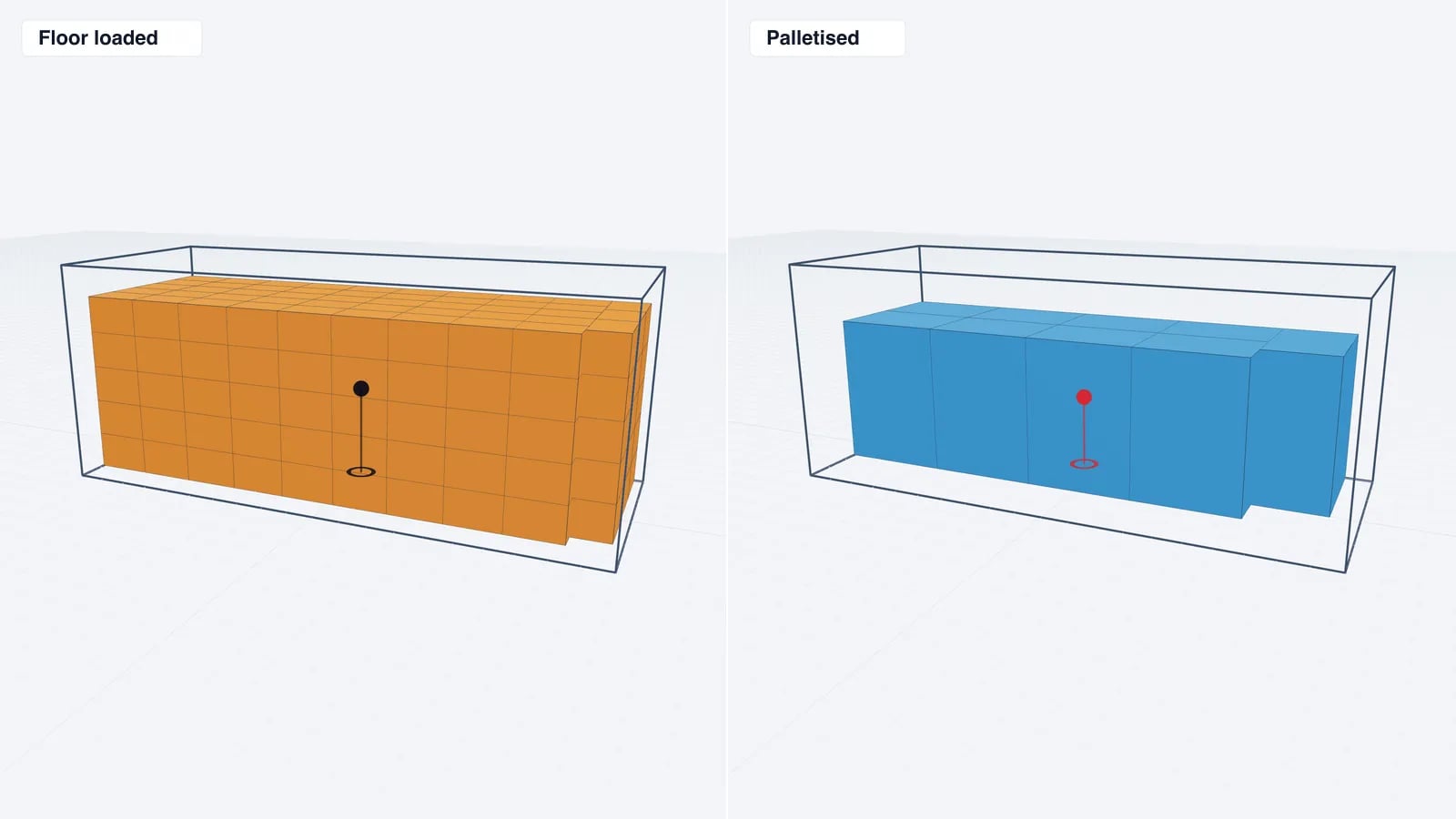
Sea containers · · 5 min read
Floor Loading Cartons in a Container vs Palletised Loads
When to floor load cartons instead of palletising, how to orient and stack them, how to check carton strength, and a worked 40ft high cube comparison.
Read article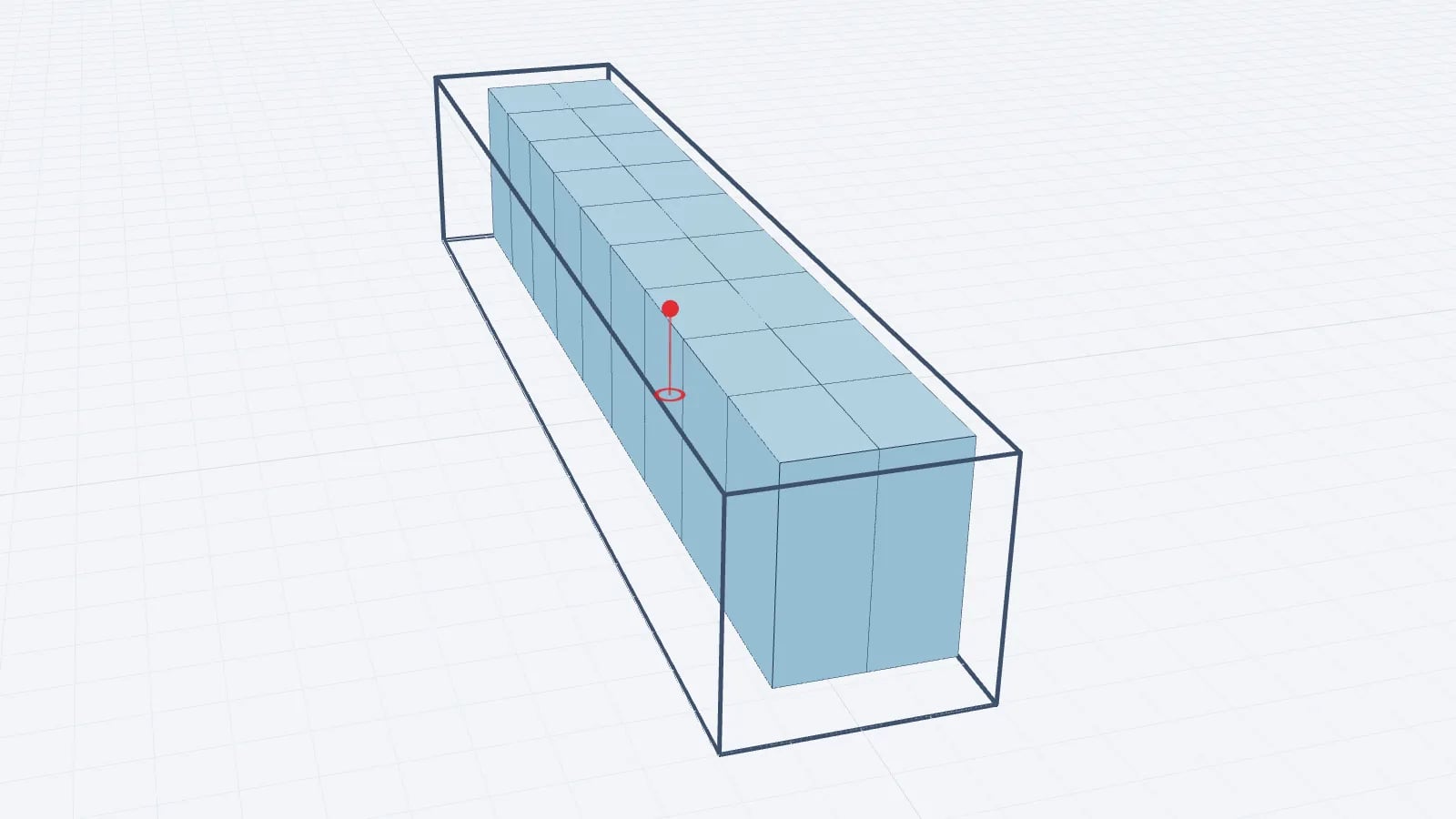
Sea containers · · 5 min read
Reefer Container Loading: Airflow, Red Line and Pallet Plans
How reefers move air, why the T-floor and red load line limit your plan, chilled vs frozen stowage, pre-cooling, and a worked 40ft reefer pallet plan.
Read article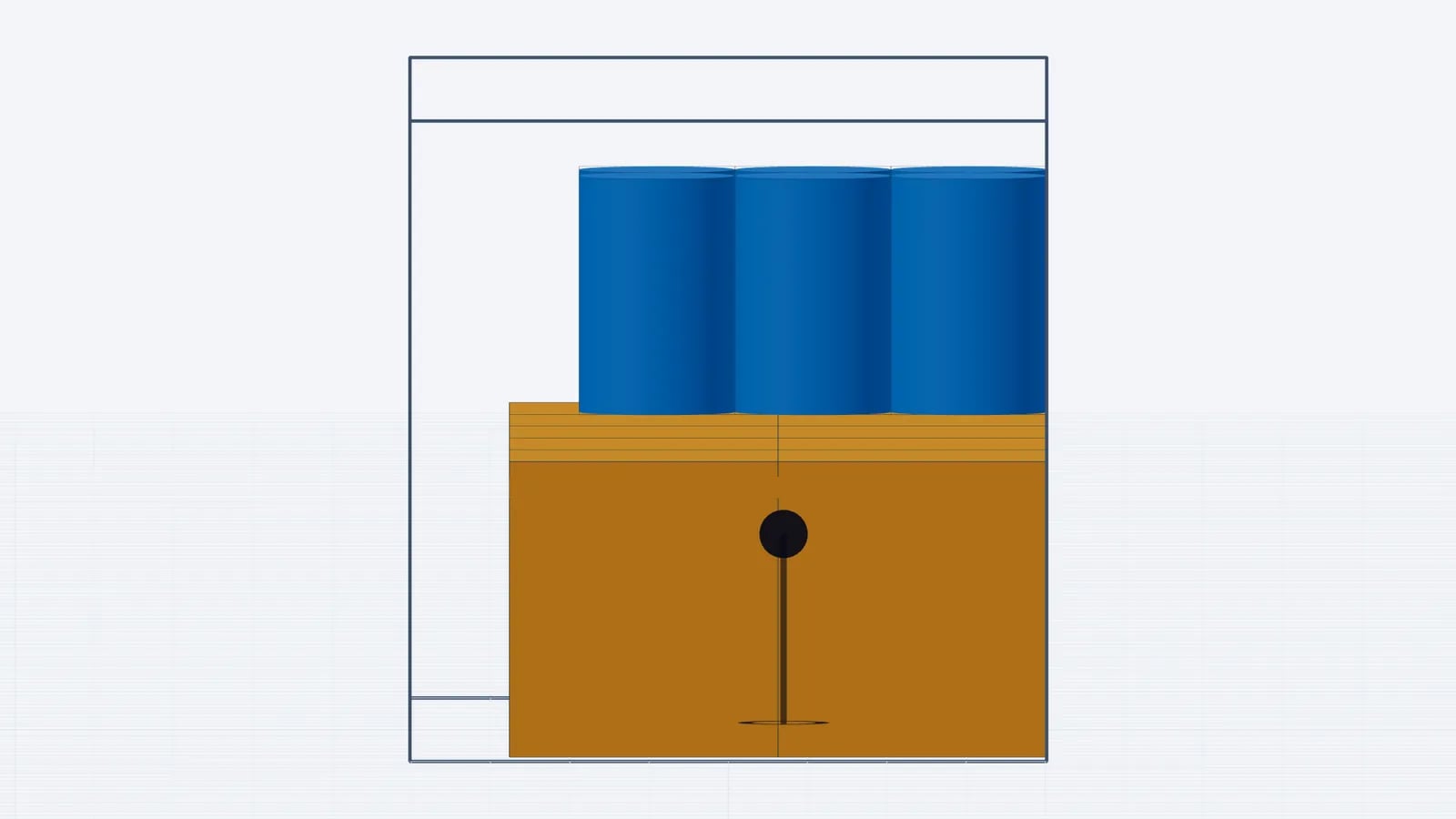
Sea containers · · 6 min read
Container Dunnage: Airbags, Blocking, Bracing and Void Fill
How to secure container cargo with airbags, timber blocking, bracing, lashing and void fill, and how to plan the load so there are fewer gaps to fill.
Read article