Truck Axle Weight Limits in the EU: 96/53/EC Explained
EU axle weight limits under Directive 96/53/EC: 40 t gross, 11.5 t drive axle, tandem and tri-axle limits, national differences and what overloading costs you.
Road freight · · 5 min read
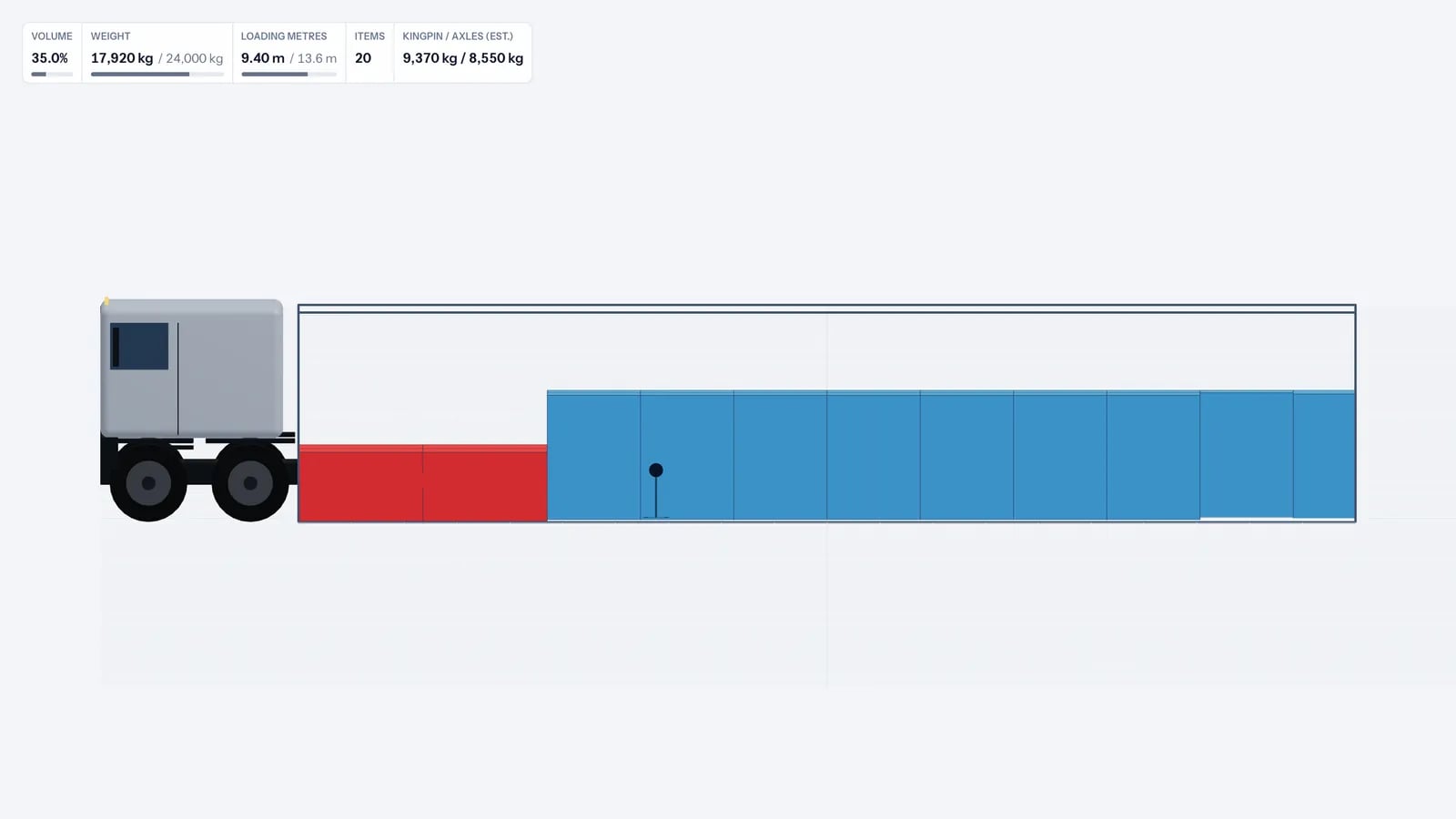
In the EU, Directive 96/53/EC sets the weights that member states must accept for vehicles in international traffic: 40 t for a five- or six-axle articulated vehicle, 44 t for some combinations carrying a 40-foot ISO container in combined transport, 11.5 t on a single drive axle and 10 t on a single non-driving axle. Many countries allow more on domestic journeys, so always check the national rules for each country on the route.
A truck can be legal on gross weight and still overloaded on one axle. Both limits apply at the same time, and the load plan decides how the weight is shared between them.
Axle limits in Directive 96/53/EC
The directive's Annex I sets maximum weights per axle and per axle group. The most relevant values for road freight planners are summarised below; the full text has more cases and conditions.
| Axle or group | Maximum (international traffic) |
|---|---|
| Single non-driving axle | 10 t |
| Single driving axle | 11.5 t |
| Tandem axle of a motor vehicle, spacing 1.3 m to under 1.8 m | 18 t (19 t with twin tyres and air suspension or equivalent on the drive axle) |
| Tandem axle of a trailer, spacing 1.3 m to under 1.8 m | 18 t (20 t at 1.8 m or more) |
| Tri-axle of a trailer, spacing over 1.3 m up to 1.4 m | 24 t (21 t at 1.3 m or less) |
Gross weight limits
| Vehicle | Maximum gross weight |
|---|---|
| Two-axle rigid truck | 18 t |
| Three-axle rigid truck | 25 t (26 t with twin tyres and air suspension on the drive axle) |
| Four-axle rigid with two steering axles | 32 t |
| Five- or six-axle articulated vehicle or road train | 40 t |
| Three-axle tractor with two- or three-axle semitrailer carrying a 40-foot ISO container in combined transport | 44 t |
Good to know
Later amendments add allowances for some alternatively fuelled and zero-emission vehicles. This article is a planning overview, not legal advice: check the current consolidated text and the national rules that apply to your journey.
National differences
The directive guarantees what vehicles in international traffic may run at. For purely national transport, member states may set their own limits, and several do. Some allow 44 t on domestic journeys, the Nordic countries allow longer and heavier combinations on designated networks, and outside the EU the UK permits 44 t on six axles. A few routes, bridges and urban zones are lower.
Two practical consequences follow. First, a load that is legal in the country of loading may be illegal once the truck crosses a border, so plan to the strictest country on the route. Second, the vehicle's own plated weights (set by the manufacturer and shown on the plate or registration document) may be lower than the legal limit, and the lower figure is the one that counts. Steer axles in particular are often plated around 7–8 t, well below the 10 t legal figure.
Worked example: gross and axles together
Take a hypothetical five-axle articulated vehicle: a two-axle tractor with a steer axle plated at 7.5 t and a drive axle at 11.5 t, pulling a tri-axle semitrailer whose axle group is allowed 24 t.
- 1Add the axle limits: 7.5 + 11.5 + 24 = 43 t.
- 2The gross limit for international traffic is 40 t, so the gross limit binds first. You cannot use every axle to its maximum at once.
- 3Now suppose the vehicle weighs 38 t in total, but the cargo was loaded towards the front wall and the drive axle reads 12.4 t. The truck is 2 t under the gross limit and 0.9 t over on the drive axle: it is overloaded.
- 4Moving roughly a tonne of cargo back towards the trailer axles would bring the drive axle under 11.5 t without changing the gross weight at all.
This is why weight distribution is part of the load plan, not an afterthought. The mechanics are explained in weight distribution in a trailer and centre of gravity of a load.
What overloading costs
- Fines: amounts and how they scale with the percentage over the limit vary by country. Some countries can also fine the shipper or the loading party, not only the carrier.
- Immobilisation: enforcement officers can stop the vehicle until the excess is removed or reloaded, which means a second vehicle, a delay and an unhappy customer.
- Safety: overloaded axles lengthen braking distances, overheat tyres and brakes, and make the vehicle less stable in bends.
- Road wear: pavement damage rises steeply with axle load, which is the reason axle limits exist in the first place.
- Insurance and liability: an overloaded vehicle involved in an accident can complicate insurance claims.
Many countries use weigh-in-motion sensors in the road to pre-select trucks for a static weighbridge check, so overloads are increasingly found without a random stop.
Practical rules for planners
- Plan to the plated weights of the actual vehicle, and to the strictest country on the route.
- Use real cargo weights. Estimated or "nominal" pallet weights are the most common cause of surprise overloads.
- Watch partial loads: half a trailer of heavy goods at the front wall is the classic drive-axle overload.
- When the plan is close to a limit, check on a weighbridge before departure. A practical checklist is in how to avoid overloading fines.
Tip
EveryLoading shows an axle-load estimate in the stats bar using the axle positions and limits you enter in the Loading space tab, and warns when a value goes over. It counts cargo only, not the vehicle itself, so treat it as an early warning. See weight, axle loads and centre of gravity.
Frequently asked questions
What is the maximum drive axle weight in the EU?
Directive 96/53/EC allows 11.5 t on a single driving axle for vehicles in international traffic. The vehicle's plated weight can be lower, and then that lower value applies.
Is 44 tonnes allowed in the EU?
For international traffic, 44 t is allowed for certain combinations carrying a 40-foot ISO container in combined transport. Several countries also allow 44 t on domestic journeys, but this is national law and varies.
Can a truck be under 40 t and still be overloaded?
Yes. If cargo is concentrated in one area, a single axle or axle group can exceed its limit even when the gross weight is legal.
Who is responsible for an overloaded truck?
The driver and carrier are always in scope, and in some countries the consignor or loading party can be fined too. Check the rules in each country on the route.
Keep reading
Road freight · · 5 min read
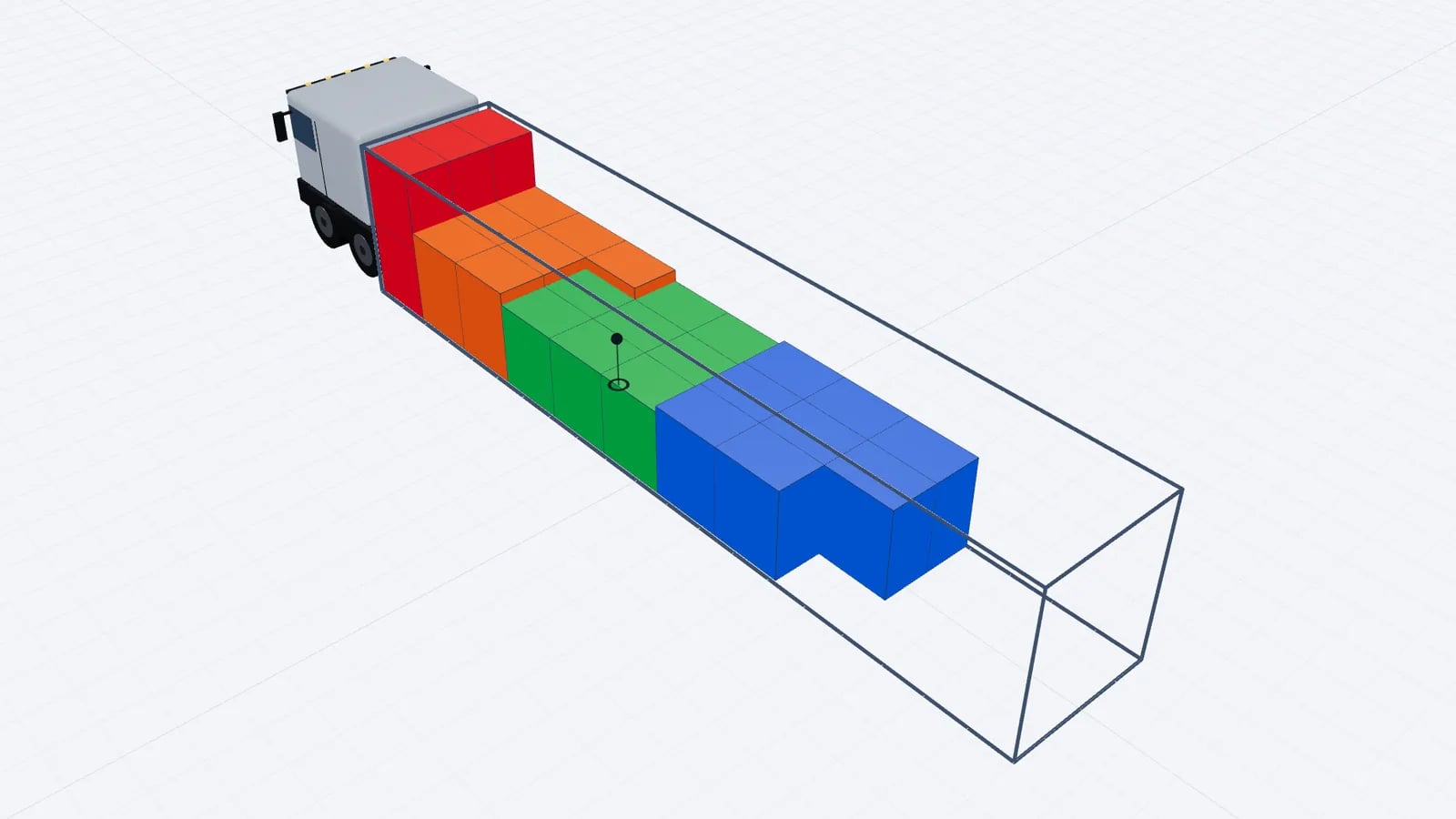
Multi Drop Loading: How to Plan a Truck for Several Stops
Plan a multi-drop truck so every stop unloads without moving other cargo: LIFO order, lanes, stop numbers, axle loads after each drop and a worked example.
Read article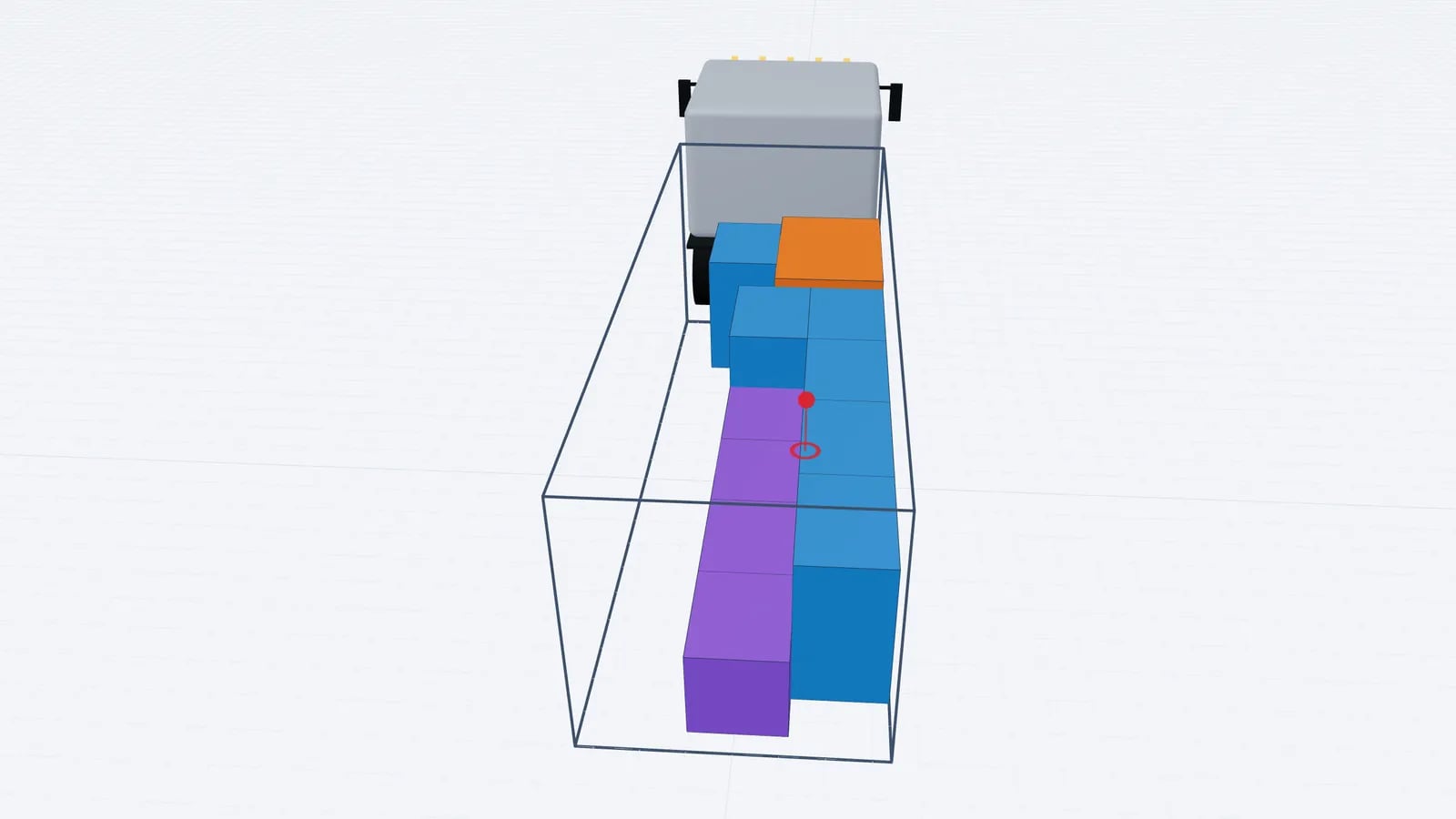
Road freight · · 5 min read
Load Securing Basics: EN 12195-1, Friction, Lashing, Blocking
The principles of load securing under EN 12195-1: design forces, friction, blocking, lashing, body strength, and how a gap-free load plan cuts securing effort.
Read article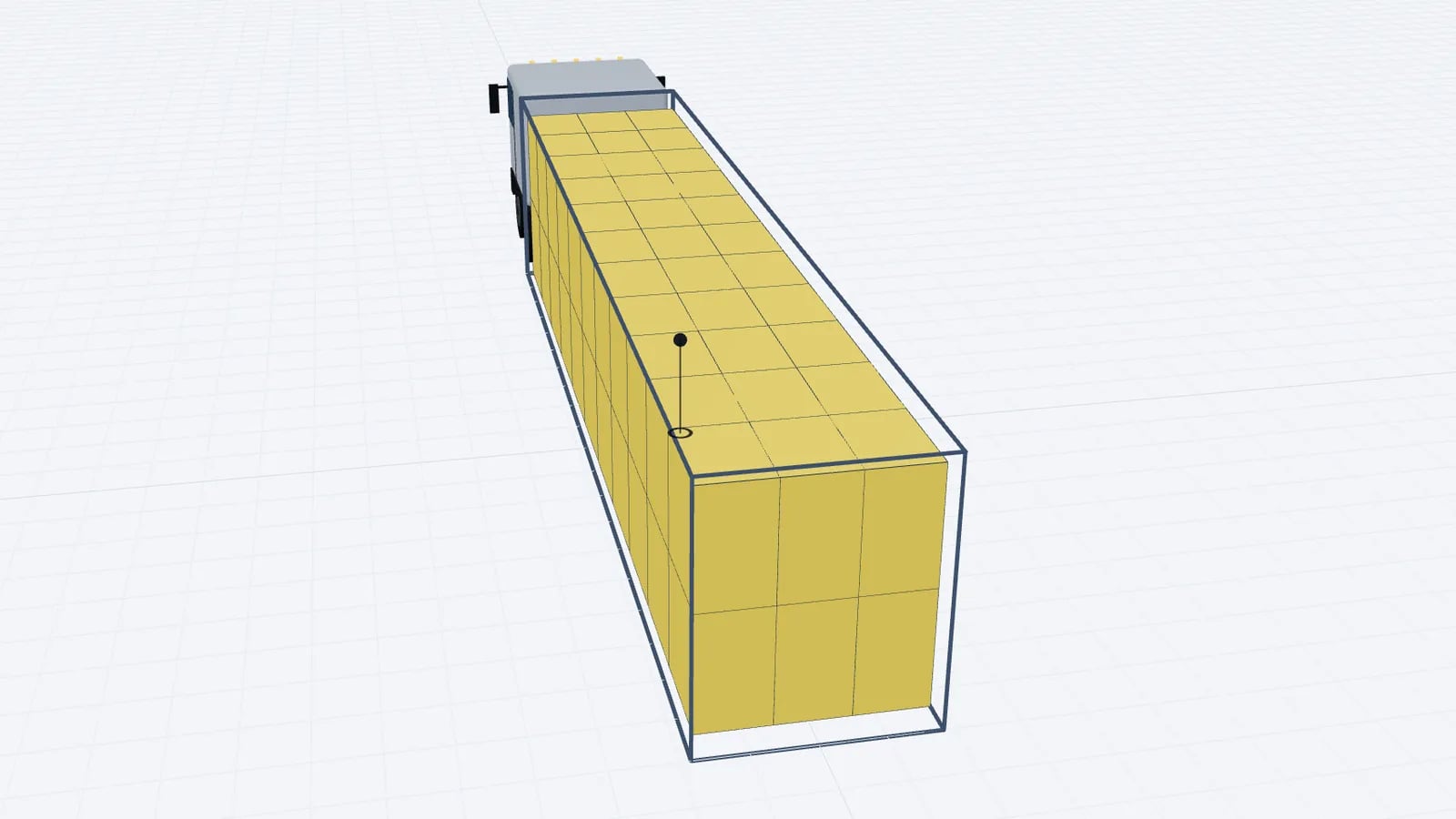
Road freight · · 5 min read
Double Stacking Pallets in Trailers: Height, Weight, Stability
When you can double stack pallets in a trailer: maximum pallet heights in standard and mega trailers, weight on the bottom pallet, payload and stability.
Read article